Why small accessories shape your shooting experience
A quality bow and matched arrows form the baseline of your setup, but auxiliary accessories largely dictate how comfortable, repeatable, and safe your shooting sessions will be. Gear such as forearm protectors, specialized retrieval pullers, and illuminated nock systems solve distinct mechanical issues that archers encounter every day. Far from being decorative add-ons, these items directly influence arrow trajectory, protect your body from repetitive string impact, and eliminate physical strain at the target bail.
When archers skip basic utility items, shooting sessions tend to end prematurely due to forearm bruising or hand fatigue from fighting high-density foam targets. Introducing lighted components also alters the balance of the arrow shaft, which makes understanding arrow dynamics and kinetic energy essential. Equipping yourself properly means looking at how each component interacts with your arrow shaft, your shooting form, and the target media.
Whether you spend your afternoons running practice rounds at local indoor archery ranges or walking field courses in the timber, having the right utility tools turns frustrating friction points into smooth, routine operations. Investing in reliable accessories protects both your physical stamina and your costly carbon equipment over hundreds of practice ends.
Protecting your forearm from bowstring slap
An archery forearm protector is often dismissed by experienced archers as a beginner-only tool, but it serves as an indispensable safety barrier for shooters of every skill level. When a bowstring releases, it travels forward with massive velocity before oscillating violently past its brace height rest position. If your bow arm elbow rotates inward or your grip torques slightly under fatigue, that string can strike the soft tissue of the inner forearm, causing deep contusions and flinching habits that degrade accuracy.
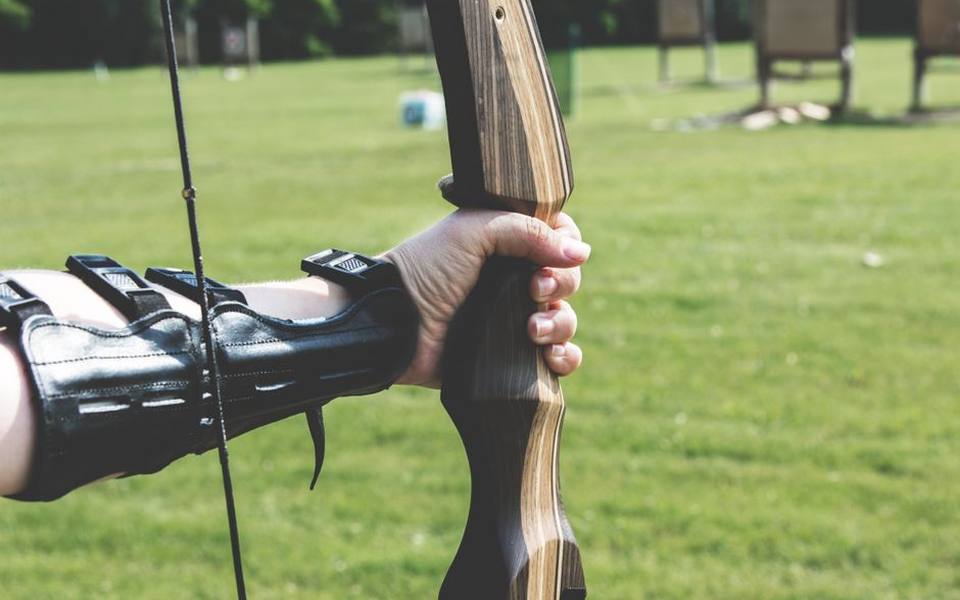
Modern arm guards range from simple two-strap vented plastic shields to full-length compression sleeves with integrated high-density rubber strips. A compression-style protector keeps bulky hunting jacket sleeves pinned down close to your skin, preventing loose fabric from snagging the string on release. Compact two-strap guards work exceptionally well during warm weather, covering only the vulnerable forearm impact zone without trapping excess body heat during long practice strings.
Proper placement matters as much as the material itself. The guard should sit flat against the inner forearm, positioned roughly two inches below the wrist joint and extending toward the crook of the elbow. If the guard slides around during your shot routine, adjust the tension so it sits firmly without cutting off circulation, ensuring your clearance remains clear and consistent on every single draw cycle.
Understanding lighted nocks and how they activate
Lighted nock designs transform the tail end of an arrow into a bright visual tracer that allows you to track flight path and spot impact locations in dim conditions. Two primary engineering concepts dominate the market: mechanical micro-switches and conductive wire contact closures. Both styles replace standard plastic nocks, housing an ultra-compact lithium battery and a light-emitting diode sealed inside a high-impact polycarbonate housing that withstands thousands of pounds of instantaneous acceleration.
Piston-actuated systems, commonly seen on nocturnal arrow nock configurations, rely on the sudden forward push of the bowstring against the throat of the nock to slide an internal pin forward and trip a tiny mechanical switch. Resetting these nocks typically requires inserting the tip of an included tool, a knife point, or a field tip into a small casing hole to toggle the switch back to the off position after retrieval.
Conductive styles, typical of an arrow lumenok installation, complete the electrical circuit when the metal wire prongs on the nock base contact the conductive carbon fiber of the arrow shaft wall. When fired, string pressure seats the nock deeper into the shaft, bridging the circuit to ignite the diode. Turning these off involves pulling the nock back slightly until the metallic contact breaks, making them fast to reset between practice shots.
Sizing lighted nocks across arrow shaft diameters
Arrow shafts do not share a single standard internal diameter, meaning nock selection requires precise matching to your specific shaft dimensions. Micro-diameter carbon shafts designed for low wind drift commonly feature a 0.166-inch internal diameter, requiring specialized ultra-slim components such as a nockturnal g nock. Stepping up to mid-diameter shafts with a 0.204-inch inner dimension demands a nocturnal x nock to ensure a snug, concentric friction fit that will not wobble upon release.
Standard hunting and target carbon arrows usually measure 0.244 to 0.246 inches inside, which represents the most widespread size profile. To eliminate confusion across multiple bow builds, several manufacturers provide a nockturnal universal fit package. These kits include an undersized core nock paired with multiple precision-molded adapter bushings, allowing the same illuminated component to fit securely into X, H, S, or GT internal shaft sizes by simply swapping the outer sleeve.
Choosing the wrong diameter can cause catastrophic equipment failure. An undersized nock will fly out of the shaft under acceleration, mimicking a partial dry fire that can shatter carbon fibers and damage bow limbs. Conversely, forcing an oversized nock into a tight carbon shaft can expand or hairline-crack the composite material at the tail end, creating an arrow that may explode under high draw-weight pressure.
Crossbow specific nock configurations
Crossbows exert vastly more acceleration force than conventional vertical bows, requiring specialized nock geometries engineered to withstand hundreds of pounds of downward downward string pressure. Flat nocks, half-moon grooves, and capture designs are each engineered for specific trigger box and rail clearances. Using a standard vertical nock in a modern crossbow is an immediate safety hazard, as the narrow bowstring will ride over or under the tail and trigger a catastrophic dry fire.
To address safety and alignment across differing crossbow latch systems, designs such as omni nock arrows utilize multi-directional channel grooves. These symmetrical profiles allow the bolt to be loaded on the flight rail regardless of vane orientation, seating the string securely without forcing the shooter to align a specific index vane downward. This design significantly reduces the risk of accidental dry fires caused by rapid loading under field conditions.
Heavy-duty lighted setups like lumenok crossbow nocks are built with reinforced polymer walls and thicker conductive contact points capable of handling violent kinetic transfer. These high-energy bolts launch at speeds often exceeding 400 feet per second, making illuminated tracing almost mandatory if you want to visually track bolt flight and verify target impact without losing expensive equipment in dense ground cover.
The mechanics of arrow pullers on dense targets
Dense layered foam targets, compressed carpet backstops, and molded 3D animal targets generate tremendous friction heat when stopping a fast-moving carbon shaft. This thermal friction momentarily fuses target foam to the arrow finish, requiring enormous pull force to break the bond. An arrow puller tool solves this problem by using textured, high-traction rubber to maximize gripping surface area, turning wrist-wrenching tugs into a controlled, linear withdrawal.
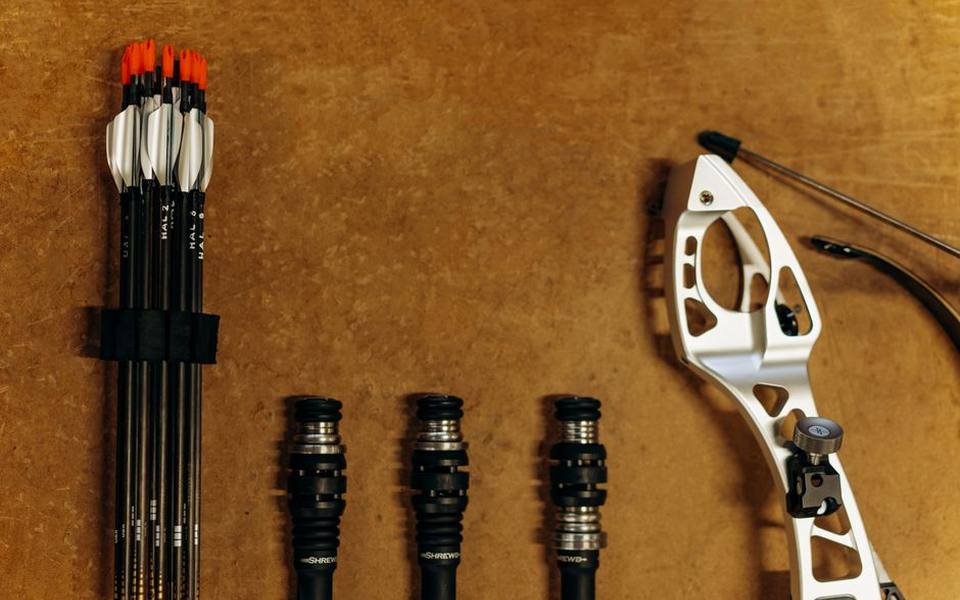
Relying on bare hands to twist and wrench stuck shafts often leads to bent aluminum cores, micro-cracks in carbon weave, and severe palm blisters. A molded rubber cylinder or an ergonomic tool like an easton arrow puller wraps entirely around the shaft, multiplying your grip force through mechanical leverage and high-coefficient elastomeric materials. This lets you pull straight backward along the arrow axis without bending or torquing the carbon tube.
Shooting across varied weather conditions at outdoor 3D archery courses highlights the value of carrying a puller on your quiver belt. Wet foam targets grip shafts with irregular suction, and rainy conditions make bare-hand extraction nearly impossible. Pullers engineered with contoured finger grooves or plier-style handles provide consistent traction regardless of moisture, mud, or cold fingers.
Calculating arrow kinetic energy and momentum
Adding accessories like lighted nocks, heavier inserts, or lighted collars directly alters arrow weight and downstream performance. Kinetic energy (KE) represents the destructive work capacity of an arrow upon impact, expressed in foot-pounds. It is calculated using the classic ballistic formula: KE equals total arrow weight in grains multiplied by arrow velocity in feet per second squared, all divided by the constant 450,240.
While kinetic energy emphasizes arrow speed due to the velocity squared factor, momentum determines how deeply an arrow penetrates dense media without deflecting. Momentum is calculated as total arrow mass in grains multiplied by velocity, divided by 225,400, resulting in pound-seconds. Heavier arrows maintain their forward momentum far more effectively through friction-heavy backstops, even though they launch at slightly reduced initial exit velocities.
A typical lighted nock adds between 10 and 25 grains to the extreme tail end of the shaft compared to a standard plastic nock. While this slight increase minimally impacts overall kinetic energy calculations, it shifts the arrow balance point rearward. Archers visiting a full-service archery pro shop often chronograph their bows before and after installing illuminated components to verify real-world speed variations and ensure optimal terminal output.
Tuning considerations when adding tail weight
Installing tail weight alters your arrow's front-of-center balance (FOC), which represents the percentage of total weight located in the forward half of the shaft. Standard target and hunting setups generally target an FOC between 10% and 15% for stable downrange flight. Adding a heavy lighted nock pulls that center of gravity backward, which can make arrows more susceptible to wind drift and erratic planing if the front end is not adjusted accordingly.
Beyond balance point shifts, tail weight directly influences the dynamic spine, which describes how the arrow flexes as it leaves the bow. Adding mass to the rear of the shaft acts as an inertial anchor against the forward push of the string, effectively causing the arrow to behave stiffer in dynamic flight. If your bow is tuned on the threshold of a weak spine, rear weight might accidentally stabilize it; if it is already stiff, tail weight can exacerbate erratic paper-tune tears.
Correcting for tail weight is straightforward once you identify the shift. Archers often compensate by increasing point weight by 20 to 50 grains or adding brass tip inserts to restore optimal FOC. Taking professional archery ranges with lessons can help you learn how to paper tune your bow properly after swapping nock components, ensuring true arrow flight without tail-kick or broadhead wobble.
Range etiquette and safety with accessories
Using illuminated accessories and retrieval tools comes with specific line courtesies that maintain range safety and respect fellow shooters. While lighted nocks are invaluable in field setups, some competitive target leagues or indoor target clubs restrict them during tournament scoring because glowing lights can distract neighboring archers on the shooting line. Always consult the range safety officer or match director regarding local illumination rules before stepping up to the line.

When retrieving tightly seated shafts using an arrow puller tool, never pull if an archer is standing directly behind you in your line of recoil. If the target suddenly releases its grip, you will stumble backward with significant momentum, potentially impaling or knocking down anyone in your immediate rear radius. Position your body to the side, brace one hand against the target face, and pull straight back while maintaining clear peripheral awareness.
Be mindful of target faces when extracting stubborn shafts. Twisting an arrow vigorously while using a heavy puller can tear foam out of expensive 3D animal targets or rip paper target scoring rings off the bail. Grip the shaft directly at the foam entry wound rather than out toward the vanes to prevent bending the carbon tube, and pull with smooth, steady pressure to keep the target core intact.
Routine inspection and battery maintenance
Lighted nocks require routine maintenance to ensure dependable ignition when an arrow leaves the string. Lithium micro-batteries slowly degrade over time, especially when stored in cold garages or vehicles during winter practice seasons. Periodically inspect the battery contacts on lumenok arrows and similar conductive designs for oxidation or dirt build-up, cleaning the metal prongs with a cotton swab dipped in isopropyl alcohol to maintain conductivity.
Mechanical nocks should be test-fired and shut off several times throughout pre-season practice to verify that the internal switch seats reliably without excessive play. When deactivating a nock, avoid using excessive force or sharp metal picks that can gouge the structural polycarbonate housing. Micro-fractures around the nock ears can cause the throat to split open during release, destroying the arrow and risking limb damage.
Inspect the plastic throat of every nock for signs of string pinch or stress whitening after every shooting session. If an incoming arrow makes contact with a nock in the target group, discard that nock immediately, even if the light still functions. Maintaining structural integrity at the rear of your arrow is the only way to guarantee consistent release velocity and prevent hazardous carbon blowouts at full draw.
Published 2026-09-21 · reviewed with each rebuild, last October 2026.
Find archery ranges & sports shops near you
The directory lists 38,975 archery ranges & sports shops by state and city — pick your state or use the “Near me” button in the header.
More guides
-
 Money
MoneyA Guide to Archery Range Fees and Lesson Costs
-
 Buying
Choosing Broadheads and Aiming for the Perfect Shot
-
 Service
DIY Bow Maintenance, Tuning, and Basic Repairs
-
 Buying
Choosing Sights and Rangefinders for Better Accuracy
-
 Buying
Essential Gear for Target Practice and Bowhunting Preparation
-
 Money
MoneyUnderstanding Bow Purchase and Restringing Costs: A Complete Pricing Guide
-
 Owning
Arrow Selection, Cutting, and Fletching at Home: A Complete Guide
-
 Safety
Bowhunting Shot Placement Guide for Deer and Turkey
-
 Buying
Complete Guide to Choosing the Best Crossbow Broadheads
-
 Money
MoneyHow Much Does Archery Cost? A Realistic Beginner Budget
-
 Buying
Choosing the Right Arrows and Field Points: Shaft Materials, Weights, and Tuning
-
 Buying
Best Archery Sets for Beginners: Complete Buyer Guide and Starter Tips
-
 Owning
Best Archery Targets and Backstops: 3D, Foam, Bag, and DIY Setup Guide
-
 Buying
Beginner Archery Buying Guide: Recurve, Compound, and Traditional Bows
-
 Buying
Bowfishing Equipment Guide: Bows, Reels, Arrows, and Rigging Setups
-
 Owning
Lighted Nocks and DIY Arrow Building: Fletching, Cutting, and Tuning
-
 Buying
Crossbow Bolts, Broadheads, and Cocking Devices: Complete Buyer's Guide
-
 Buying
Complete Arrow Selection Guide: Carbon Shafts, Spine, Length, and Brands
-
 Safety
Archery Protective Gear: Arm Guards, Chest Protectors, Tabs, and Slings
-
 Buying
Archery Quivers Buying Guide: Hip, Back, and Bow-Mounted Options
-
 Buying
Bow Release Aids Explained: Wrist Strap, Thumb Button, and Hinge Releases
-
 Owning
Compound Bow Tuning and Care: Strings, Wax, Stabilizers, and Cases
-
 Buying
Arrow Rests Compared: Whisker Biscuit, Cable-Driven, and Limb-Driven
-
 Safety
Archery Lessons, Proper Form, Range Etiquette, and Youth Programs
-
 Owning
Complete Guide to Single Pin Bow Sights and Sight Tapes
-
 Owning
Arrow Selection and DIY Arrow Building: Shafts, Fletching, and Tools
-
 Owning
Finding Archery Ranges, Pro Shops, Clubs, and Instructor Programs
-
 Buying
Best Hunting Broadheads: Fixed Blade vs Mechanical Broadheads
-
 Buying
Archery Targets Guide: 3D Targets, Bags, Blocks, and DIY Backstops
-
 Buying
Archery Quivers Guide: Bow-Mounted, Hip, Back, and Crossbow Quivers
-
 Service
Bow Tuning and Setup: Paper Tuning, Arrow Rests, and Bow Maintenance
-
 Buying
Bowfishing Gear Guide: Bows, Rigs, Arrows, and Setup Options
-
 Buying
Archery Release Aids Guide: Thumb, Hinge, Wrist, and Mechanical Releases
-
 Buying
Essential Bowhunting Gear, Deer Supplies, and Gift Guide
-
 Buying
Crossbow Buying Guide: Matching Platforms, Bolts, Optics, and Fletching
-
 Buying
Beginner Bow & Arrow Starter Kits: How to Choose Your First Setup
-
 Owning
Traditional Archery, Longbows, and Primitive Gear
-
 Buying
Deer Hunting Bows: Comparing Recurve and Compound Setups, Finding Deals, and Studying Hunting Film
-
 Buying
Compound Bow Setup, Tuning, Form, and Equipment Guide
-
 Owning
Compound Bow Release Aids and Grip Tape: Enhancing Control and Consistency
-
 Service
Crossbow Maintenance: String Replacement and Scope Sighting Guide
-
 Owning
Broken Bow Cabin Rentals: Complete Beavers Bend Vacation Guide
-
 Safety
Broken Bow Lake Rentals: Complete Guide to Boats, ATVs, and Trail Gear