Evaluating Crossbow Platforms Before You Buy
Choosing your first hunting or target rig starts with matching the mechanical design to your physical comfort and intended shooting style. Modern rigs vary dramatically from ultra-narrow reverse-draw designs pushing extreme velocities downrange to traditional forward-facing compound limbs that prioritize wider cocking channels and simpler maintenance. Before committing funds, test the shoulder balance, overall mass, and trigger feel in person rather than judging purely by advertised speed ratings. A model that feels well-balanced offhand consistently outperforms an unwieldy platform that vibrates heavily upon release.
Draw effort remains a decisive factor for most buyers, particularly during late-season hunts or extended practice sessions. While modern limb sets often generate draw weights between one hundred fifty and two hundred twenty pounds, integrated mechanical cocking cranks have largely replaced raw rope sleds on high-energy setups. These internal cranks reduce cocking resistance to a modest hand-crank effort, making them accessible to shooters of any physical strength while ensuring exact center-serving alignment every single stroke.
The overall physical footprint also determines how well the rig performs in your typical shooting environment. Dense timber and narrow ground blinds favor compact axle-to-axle profiles that measure fewer than ten inches when fully cocked, preventing limb tips from catching brush or blind fabric. Conversely, slightly wider platforms often provide smoother trigger break characteristics, simpler cable routing, and wider tolerances for routine maintenance, making them forgiving choices for backyard practice and casual target sessions.
Understanding Bolt Length, Spine, and Diameter
A crossbow projectile functions under vastly higher initial acceleration than a standard vertical arrow, requiring a much stiffer carbon spine to resist violent bending along the flight deck. Mainstream factory setups commonly utilize twenty-inch shafts, exemplified by widely distributed Barnett Headhunter twenty-inch bolts, which establish an optimal compromise between overall arrow weight, front-of-center balance, and broadhead clearance beyond the front stirrup. Using a shaft that is even slightly too short risks catching broadhead blades against the riser during release.
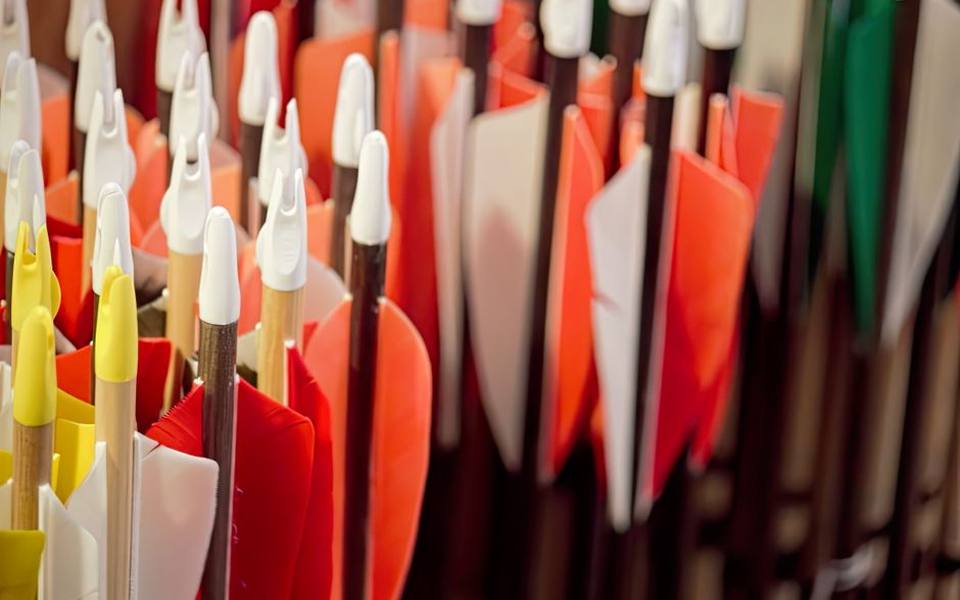
Stiffness ratings for horizontal bows do not follow the standard spine deflection charts used in traditional vertical archery. Because modern limbs unload immense kinetic energy into a projectile measuring only sixteen to twenty-two inches, insufficient wall thickness causes radical oscillation off the rail, destroying downrange accuracy and potentially cracking carbon fibers. Standard offerings like Centerpoint crossbow arrows provide rigid carbon walls tailored specifically for introductory compound platforms operating in moderate velocity brackets.
Outer diameter also influences how cleanly an arrow tracks through the barrel or open rail assembly. Standard diameter carbon shafts maintain uniform seating inside the flight track, ensuring the nock rests perfectly centered against the bowstring serving. If you drop down in arrow diameter without verifying track compatibility, the bowstring can ride over or slip beneath the nock center, creating a catastrophic dry-fire event that fractures limbs and snaps cables.
When purchasing replacement shafts, always verify that total finished arrow weight meets or exceeds the platform manufacturer minimum specification. Shooting an arrow that falls below the recommended minimum grain threshold produces severe mechanical shock similar to a dry fire, instantly voiding factory warranties and risking structural failure across the limb pockets.
Nock Profiles and Safety Channels
Nock selection represents the single most critical safety interface on any modern horizontal rig. Traditional compound models historically relied on flat nocks or standard aluminum half-moon designs, which guide the string across a shallow horizontal groove. However, modern ultra-narrow platforms pull bowstrings into extremely acute string angles when cocked, which can cause a standard half-moon nock to pinch, slip beneath the string, or force the bowstring over the arrow completely.
To counter this danger, manufacturers developed specialized deep-groove interfaces such as modern Alpha Nock arrows, which feature deep string channels and radiused micro-grooves designed to capture the bowstring securely. These high-engagement designs prevent string roll even on platforms that measure fewer than seven inches axle-to-axle when cocked. Matching the exact nock style specified in your owner manual is not an aesthetic preference; it is a mandatory mechanical requirement for safe operation.
Nock material also dictates structural longevity under heavy string impact. High-impact polymer composite nocks absorb cyclical shock during practice, but high-energy rigs exceeding four hundred feet per second often benefit from threaded aluminum or hybrid nock inserts. Visiting a reputable pro shop allows you to inspect proper nock alignment with the cock feather, ensuring smooth rail engagement every shot.
Heavy-Grain Shafts and Downrange Kinetic Energy
While lightweight carbon shafts yield impressive chronograph speeds, experienced hunters frequently favor heavy-grain construction for reliable penetration and quieter shot cycles. Projectiles built with dense carbon layering, such as Carbon Express PileDriver bolts, shift the platform focus toward bone-crushing momentum rather than flat trajectories. The added physical weight absorbs more mechanical energy directly from the limbs, noticeably dulling the loud snap of the release.
Front-of-center balance, commonly referred to as FOC, describes the percentage of arrow mass concentrated in the front half of the shaft. Heavy brass inserts seated behind the point pull the balance forward, typically settling between thirteen and eighteen percent for optimal crossbow performance. This pronounced forward balance stabilizes short projectiles quickly as they leave the rail, fighting wind drift and keeping flight paths true through turbulent crosswinds.
When hunting big game, retained kinetic energy matters far more than muzzle velocity across practical sporting distances. A heavy carbon shaft carries sustained forward momentum through hide, muscle, and heavy rib bone, delivering consistent pass-through shots that create heavy blood trails. If your primary goal involves dense cover hunting where shot distances remain inside forty yards, heavier carbon shafts provide noticeable tactical advantages.
Matching Factory Tolerances and Premium Carbon Shafts
Factory-matched arrow packages are engineered to mirror the exact velocity, stroke length, and flight rail dimensions of specific platform lineups. Premium packages such as TenPoint Pro Elite 400 bolts are constructed to tight straightness tolerances down to thousandths of an inch, ensuring that sequential shots group tightly at extended ranges. When purchasing arrows for high-velocity rigs, selecting shafts with matching weight codes minimizes point-of-impact variation from one arrow to the next.
Mid-tier platforms often achieve their best field accuracy when paired with purpose-built branded alternatives like Wicked Ridge arrows, which deliver consistent wall thickness and spine alignment at an accessible price point. While budget arrows may look identical on a retail shelf, premium matched sets undergo individual spine testing to verify that each shaft flexes identically under initial propulsion. This factory sorting eliminates mysterious flyers during sight-in sessions.
Investing in precision-sorted arrows pays massive dividends when transitioning from twenty-yard backstop practice to long-range target shooting. Minor inconsistencies in shaft straightness or insert concentricity multiply exponentially downrange, turning a tight two-inch cluster into a scattered six-inch pattern at fifty yards. Prioritize straightness ratings of plus or minus three-thousandths of an inch or better whenever shooting beyond standard hunting yardages.
The Mechanics of Crossbow Bolt Fletching
Stabilizing a short, stiff projectile launched at extreme speed requires specialized crossbow bolt fletching geometry. Unlike traditional target vanes that prioritize quiet, low-profile clearance, crossbow vanes typically measure between two and three-and-a-half inches with relatively stiff sidewalls. This rigid vane construction resists flattening under massive aerodynamic drag, forcing the arrow into an immediate stabilizing rotation as soon as it clears the flight rail.
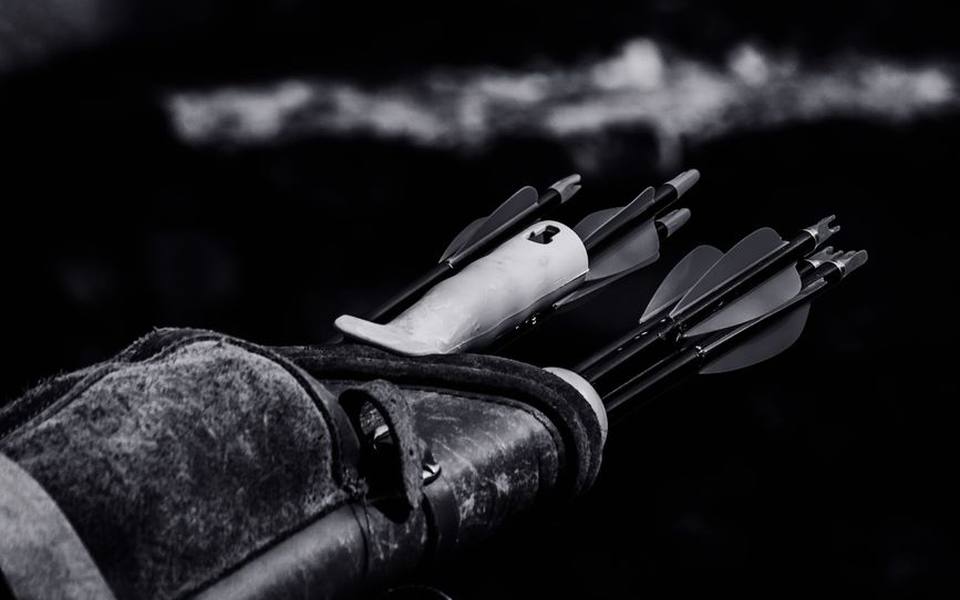
The angle at which vanes are glued to the shaft—either offset or helical—plays a monumental role in downrange grouping. A helical fletch curves gently around the shaft circumference, generating maximum rotational spin that corrects broadhead steering anomalies. However, you must carefully inspect flight rail clearance, as excessively aggressive helical angles can rub against the rail channel, creating friction that shaves plastic, erodes speed, and disrupts flight paths.
Modern low-profile high-durometer vanes solve clearance issues across compact rail channels while maintaining sufficient surface area to steer heavy broadheads. Inspect your fletchings routinely after every range session to ensure vanes remain firmly bonded to the carbon wraps. A loose or wavy vane disrupts the aerodynamic balance of the arrow, causing erratic planing that ruins accuracy even with perfectly tuned limbs.
Tuning Field Points and Arrow Weight Consistency
Achieving consistent accuracy begins with matching your practice crossbow field points precisely to the weight and profile of your planned hunting heads. Field points generally come in one-hundred-grain and one-hundred-twenty-five-grain configurations, and swapping between these weights dramatically alters both front-of-center balance and vertical point of impact. Never assume your platform will shoot standard target points to the same zero as heavier hunting setups.
Using an inexpensive digital grain scale allows you to weigh each individual component before threading it into the shaft insert. Inserts, points, shafts, and nocks all carry slight manufacturing variances; pairing a slightly lighter field tip with a heavier carbon shaft equalizes total projectile mass across your entire quiver. Striving for a total weight spread under three grains across six arrows ensures repeatable groups at an indoor range.
Field point diameter should also match or slightly exceed the outer diameter of your arrow insert. A point that sits narrower than the carbon insert exposes sharp insert shoulders to target material, accelerating wear on target faces and making arrow extraction grueling. Precision bullet-contoured field tips offer smooth target entry and effortless pulling from modern high-density layered foam blocks.
Broadhead Selection and High-Energy Deployment
Launching broadheads from modern horizontal rigs subjects blades to intense air resistance that can trigger erratic flight or premature deployment. Rear-deploying mechanical models such as the NAP Killzone crossbow broadhead utilize specialized spring retention clips or heavy collars engineered specifically to resist opening under high-speed acceleration. Standard vertical bow mechanicals often fail on fast horizontal rigs because the initial forward snap forces light retaining bands to sheer prematurely.
Fixed-blade broadheads provide unmatched structural reliability on heavy bone, but their rigid blade surfaces act like front-mounted wings if not properly tuned. To shoot fixed heads accurately from a fast platform, you must employ compact low-profile heads paired with stiff helical fletching to overcome front-end steering forces. Taking the time to test fixed broadheads on a dedicated broadhead target prevents heartbreaking surprises during fall seasons.
Regardless of whether you favor mechanical or fixed-blade heads, always spin-test every finished hunting arrow on an arrow roller before loading it into your platform. A point that wobbles even fractionally indicates a misaligned insert face or bent ferrule, which will plane aggressively through the air and miss your intended mark completely at standard sporting ranges.
Selecting Rail Optics and Calibrated Reticles
Modern horizontal platforms require optics specifically engineered to withstand bi-directional recoil forces. Unlike standard firearm scopes that manage single rearward recoil impulses, horizontal rigs generate an aggressive forward whip as limbs rebound off their power stroke, quickly destroying delicate internal erector tubes on cheap standard rifle scopes. Invest in purpose-built horizontal hunting optics built with shockproof internals and calibrated reticle markings.
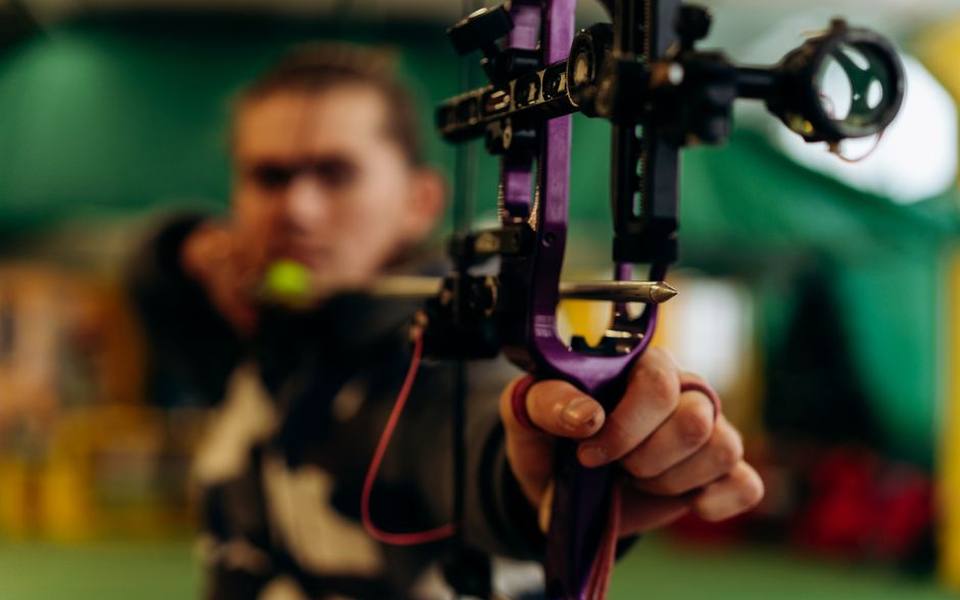
Speed-calibrated scopes simplify long-range holdovers by matching your reticle spacing to the exact measured speed of your projectile. By rotating a speed-dial ring to match your setup velocity—typically between three hundred thirty and four hundred fifty feet per second—the scope automatically spaces internal crosshairs for exact twenty, thirty, forty, and fifty-yard aiming marks. This eliminates the guesswork of holding high over target vitals.
Illuminated reticles offer practical advantages during low-light dawn and dusk feeding hours when black crosshairs easily blend into dark game coats or shadowed brush. Look for scopes offering dual red and green illumination with adjustable brightness rheostats, ensuring crisp aiming reticles that do not flare or obscure your target picture in dim timber. Testing your glass across varied distances at local 3D courses helps you master holdovers before real hunting scenarios.
Range Testing, Safety Protocols, and Routine Maintenance
Keeping your rig functioning safely requires religious attention to flight rail lubrication and string maintenance. A light film of rail lube applied every twenty to thirty shots reduces friction between the carbon shaft and metal deck, preventing serving separation and excessive heat buildup. Similarly, treating exposed string strands with quality wax keeps high-performance synthetic materials from drying out, fraying, and losing elasticity over time.
Never dry-fire a horizontal bow under any circumstance; releasing stored limb energy without the resistance of a seated arrow instantly fractures composite limbs and snaps bowstrings. Always carry a dedicated discharge bag or decocking arrow tipped with a blunt tip to unload your platform safely at the end of the day. If you need professional guidance establishing safe cocking habits, consider booking lessons or classes for beginners at a qualified facility.
Before every shooting session, conduct a methodical safety check across your entire setup. Inspect limb surfaces under bright lighting for hairline stress fractures or splinters, confirm that scope mounting screws remain torqued to specification, and ensure the anti-dry-fire safety mechanism engages smoothly when drawn. If you hunt in active regions like Archery Ranges in Pennsylvania, seasonal temperature swings make regular hardware checks essential for trouble-free operation.
Published 2026-09-21 · reviewed with each rebuild, last October 2026.
Find archery ranges & sports shops near you
The directory lists 38,975 archery ranges & sports shops by state and city — pick your state or use the “Near me” button in the header.
More guides
-
 Money
MoneyA Guide to Archery Range Fees and Lesson Costs
-
 Buying
Choosing Broadheads and Aiming for the Perfect Shot
-
 Service
DIY Bow Maintenance, Tuning, and Basic Repairs
-
 Buying
Choosing Sights and Rangefinders for Better Accuracy
-
 Buying
Essential Gear for Target Practice and Bowhunting Preparation
-
 Money
MoneyUnderstanding Bow Purchase and Restringing Costs: A Complete Pricing Guide
-
 Owning
Arrow Selection, Cutting, and Fletching at Home: A Complete Guide
-
 Safety
Bowhunting Shot Placement Guide for Deer and Turkey
-
 Buying
Complete Guide to Choosing the Best Crossbow Broadheads
-
 Money
MoneyHow Much Does Archery Cost? A Realistic Beginner Budget
-
 Buying
Choosing the Right Arrows and Field Points: Shaft Materials, Weights, and Tuning
-
 Buying
Best Archery Sets for Beginners: Complete Buyer Guide and Starter Tips
-
 Owning
Best Archery Targets and Backstops: 3D, Foam, Bag, and DIY Setup Guide
-
 Buying
Beginner Archery Buying Guide: Recurve, Compound, and Traditional Bows
-
 Buying
Bowfishing Equipment Guide: Bows, Reels, Arrows, and Rigging Setups
-
 Owning
Lighted Nocks and DIY Arrow Building: Fletching, Cutting, and Tuning
-
 Buying
Crossbow Bolts, Broadheads, and Cocking Devices: Complete Buyer's Guide
-
 Buying
Complete Arrow Selection Guide: Carbon Shafts, Spine, Length, and Brands
-
 Safety
Archery Protective Gear: Arm Guards, Chest Protectors, Tabs, and Slings
-
 Buying
Archery Quivers Buying Guide: Hip, Back, and Bow-Mounted Options
-
 Buying
Bow Release Aids Explained: Wrist Strap, Thumb Button, and Hinge Releases
-
 Owning
Compound Bow Tuning and Care: Strings, Wax, Stabilizers, and Cases
-
 Buying
Arrow Rests Compared: Whisker Biscuit, Cable-Driven, and Limb-Driven
-
 Safety
Archery Lessons, Proper Form, Range Etiquette, and Youth Programs
-
 Owning
Complete Guide to Single Pin Bow Sights and Sight Tapes
-
 Owning
Arrow Selection and DIY Arrow Building: Shafts, Fletching, and Tools
-
 Owning
Finding Archery Ranges, Pro Shops, Clubs, and Instructor Programs
-
 Buying
Best Hunting Broadheads: Fixed Blade vs Mechanical Broadheads
-
 Buying
Archery Targets Guide: 3D Targets, Bags, Blocks, and DIY Backstops
-
 Buying
Archery Quivers Guide: Bow-Mounted, Hip, Back, and Crossbow Quivers
-
 Service
Bow Tuning and Setup: Paper Tuning, Arrow Rests, and Bow Maintenance
-
 Buying
Bowfishing Gear Guide: Bows, Rigs, Arrows, and Setup Options
-
 Owning
Essential Archery Accessories: Lighted Nocks, Arrow Pullers, and Arm Guards
-
 Buying
Archery Release Aids Guide: Thumb, Hinge, Wrist, and Mechanical Releases
-
 Buying
Essential Bowhunting Gear, Deer Supplies, and Gift Guide
-
 Buying
Beginner Bow & Arrow Starter Kits: How to Choose Your First Setup
-
 Owning
Traditional Archery, Longbows, and Primitive Gear
-
 Buying
Deer Hunting Bows: Comparing Recurve and Compound Setups, Finding Deals, and Studying Hunting Film
-
 Buying
Compound Bow Setup, Tuning, Form, and Equipment Guide
-
 Owning
Compound Bow Release Aids and Grip Tape: Enhancing Control and Consistency
-
 Service
Crossbow Maintenance: String Replacement and Scope Sighting Guide
-
 Owning
Broken Bow Cabin Rentals: Complete Beavers Bend Vacation Guide
-
 Safety
Broken Bow Lake Rentals: Complete Guide to Boats, ATVs, and Trail Gear