The Core Dilemma: Fixed Blade Simplicity Versus Mechanical Cut Diameter
Choosing between a fixed blade and a mechanical broadhead comes down to balancing raw penetration against cutting surface diameter. Fixed blades offer structural rigidity and uninterrupted tissue slicing because they have no moving components to fail on impact. Mechanical broadheads streamline arrow flight by keeping blades tucked into the ferrule during launch, opening upon contact to produce devastating wound channels that make trailing game significantly easier.
Your bow setup dictates which style delivers dependable terminal ballistics. Lower poundage compound setups typically lack the foot-pounds of kinetic energy required to push wide-cutting expandable blades through dense shoulder muscle or heavy rib bones. In contrast, high-speed modern compounds and crossbows produce enough momentum to drive large expandables completely through medium-sized big game without stalling inside the thoracic cavity.
Shot placement, arrow speed, and target anatomy should always guide your investment. A fixed head delivers peace of mind when quartering shots demand cutting through bone, while an expandable forgives minor tuning discrepancies at extended shooting distances. Understanding how each broadhead design interacts with your bow's kinetic energy ensures you step into the woods with equipment matched to your quarry.
How Fixed Blades Deliver Uncompromising Penetration
Traditional fixed broadheads feature permanently mounted razor blades seated into a solid metal ferrule. Benchmark designs like classic NAP Thunderheads established the baseline for bowhunting reliability over decades, using chiseled trocar points and three replaceable blades to slice clean entry channels. Because energy transfers directly into cutting upon contact rather than overcoming a mechanical deployment barrier, fixed blades consistently yield deeper penetration on big game.
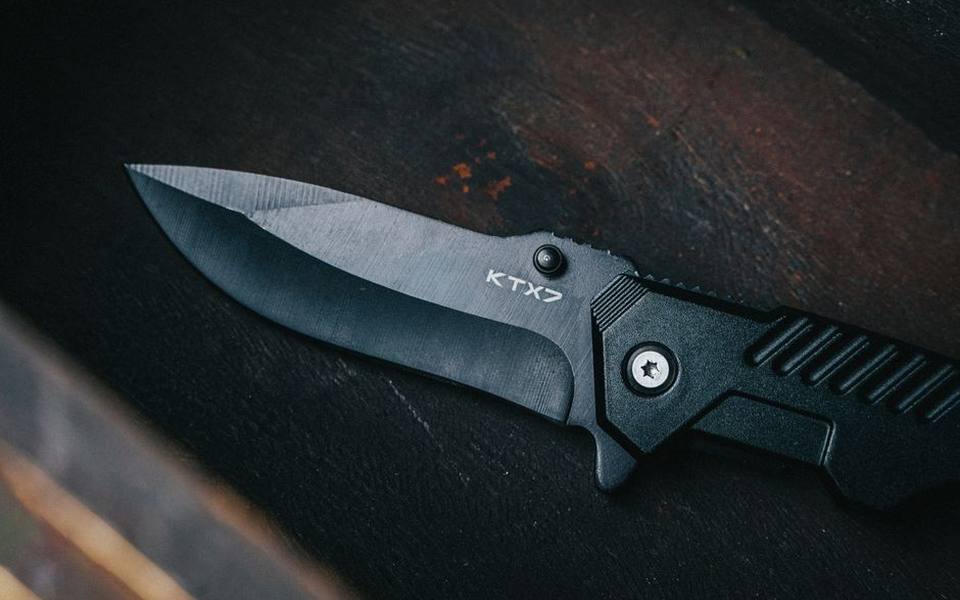
The primary mechanical advantage of a fixed blade is structural integrity. When an arrow encounters heavy shoulder bones on an elk or a quartering-away whitetail buck, a rigid cut-on-contact tip or hardened chisel point directs all momentum into splitting bone. There are no pivoting pins to bend, no retaining o-rings to tear prematurely, and no hinges to bind up during heavy resistance.
The trade-off with traditional large-profile fixed blades lies in aerodynamics. Broadheads with tall blade profiles act like small wings on the front of an arrow shaft, amplifying any tiny flaw in your bow's rest alignment or hand torque. If your rig is not properly tuned, fixed heads will steer the arrow away from your field point zero, requiring careful bow tuning before season opener.
Compact Fixed Heads and High-Speed Aerodynamics
To combat wind planing at speeds exceeding 300 feet per second, manufacturers developed compact fixed designs with reduced blade surface areas. Modern heads such as the Muzzy VXM utilize shorter ferrules and tightly swept-back stainless blades to slice through air currents cleanly. By shrinking the exposed blade footprint, these heads fly nearly identical to field points while preserving the structural durability of a one-piece or tight-tolerance fixed system.
Helical blade geometry offers another proven method to stabilize fixed designs at high speeds. Engineered heads like the Muzzy Trocar family incorporate right-helix steel blades that match arrow vane rotation in flight, dampening wobble and resisting crosswind drift. This helical orientation produces stable dart-like trajectory out of fast-shooting compound bows without compromising the chisel point's bone-splitting capabilities.
Archers transitioning to compact fixed heads must recognize that cutting diameters typically range between one inch and one-and-a-quarter inches. While entry holes may be smaller than those created by expandables, two clean holes through the vitals almost always ensure rapid recovery. For hunters pursuing massive game like moose or elk, compact fixed blades remain the gold standard for reliable pass-throughs.
Mechanical Broadheads: Cut-on-Contact and Slip-Cam Physics
Mechanical broadheads gained dominance in whitetail country because they fly with the pinpoint accuracy of target field points. Rear-deploying slip-cam systems, famously popularized by Rage broadheads 100 grain models and advanced variants like the Rage Trypan, maintain a sleek dart-like flight profile in midair. Upon impacting animal hide, the blades slide backward along the ferrule slots, pivoting into a massive cutting diameter up to two inches or more.
The wide entry wounds created by rear-deploying expandables drastically increase tissue trauma and shorten tracking jobs. Broadheads featuring titanium or hardened steel ferrules, like the Trypan architecture, withstand bone collisions better than early aluminum iterations. The resulting entrance and exit holes bleed freely, leaving heavy ground trails even when a shot strays slightly back into soft tissue.
However, opening these massive cutting edges consumes measurable kinetic energy. If your bow produces less than 55 to 60 foot-pounds of energy, driving a two-inch mechanical through hide, ribs, and vitals can rob the arrow of momentum, resulting in partial penetration. Verifying arrow weight and bow output at an archery pro shop is critical before hunting with wide-cut expandables.
Over-the-Top Expandables and Spring Retention Systems
Not all mechanicals deploy by sliding rearward; over-the-top broadheads hinge forward at the base and swing open upon tip impact. The engineering behind Grim Reaper blades represents this class, utilizing internal mini-springs or friction systems rather than exterior rubber bands or brittle plastic collars. The spring tension holds the blades locked securely inside the ferrule during explosive acceleration from the bowstring.
As the chisel point punches into the hide, the leading blade edges catch resistance and lever open instantaneously inside the chest wall. This forward-pivoting action helps preserve arrow momentum at the initial impact surface. Over-the-top designs also reduce the risk of blades catching brush during low-light stalks or snagging inside tight hip quivers while walking through timber.
The critical factor with over-the-top expandables is shooting angle. On steep quartering angles, an over-the-top blade might catch hide before the main ferrule tip strikes, occasionally deflecting the arrow along the animal's ribs. Ensuring your shots are broadside or slightly quartering-away maximizes the internal destruction these multi-blade spring mechanisms are engineered to deliver.
Hybrid Broadhead Concepts: Blending Two Worlds
Hunters caught between the bone-crushing guarantee of a fixed head and the massive hemorrhaging of an expandable often turn to hybrid configurations. Systems like the Muzzy Trocar HBX utilize a solid, fixed cut-on-contact or chisel tip leading blade paired with two expanding rear bleeder blades. This configuration guarantees an initial cutting path regardless of mechanical deployment while offering expanding blades to open wide internal channels.
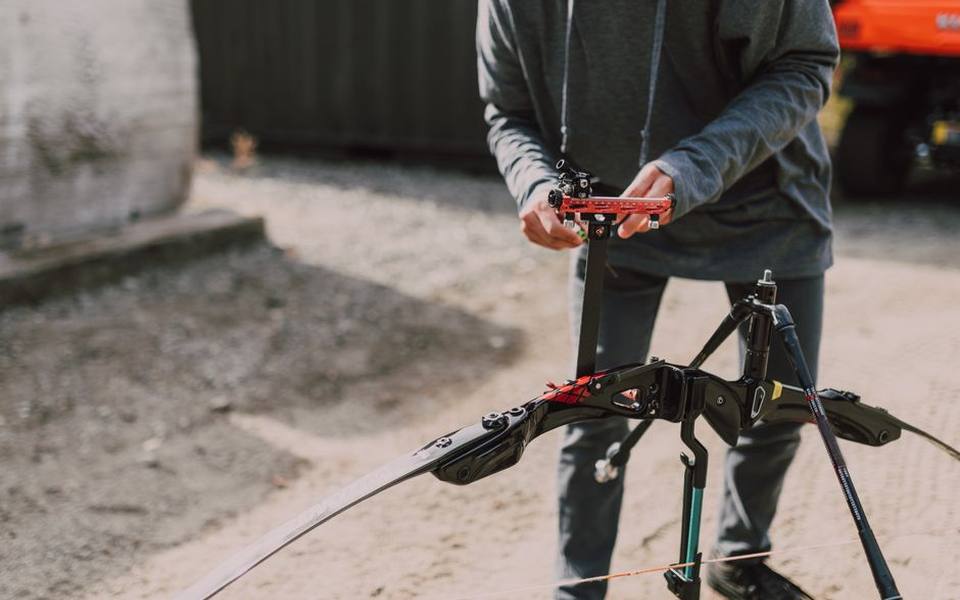
The hybrid philosophy acts as an insurance policy on marginal hits. If the mechanical swing blades encounter dense shoulder bone and fail to expand fully, the fixed leading blade continues driving through vital organs. Conversely, on ideal soft-tissue rib shots, the expanding wings open to deliver expansive cutting swaths that rival standard two-blade mechanical heads.
Tuning a hybrid broadhead requires careful attention to arrow spine stiffness. Because the head carries both exposed fixed edges and pivoting elements, it exhibits slightly more aerodynamic drag than a pure expandable. Checking your arrow flight in a controlled indoor range will highlight whether your fletching configuration has enough surface area to stabilize the hybrid head across long target distances.
High-Energy Crossbow Demands and Broadhead Retention
Modern hunting crossbows launch arrows at velocities between 380 and 470 feet per second, subjecting broadheads to violent launching g-forces. Standard vertical-bow broadheads frequently fail on crossbows because the explosive acceleration forces mechanical blades to deploy prematurely in flight. Dedicated designs like the Muzzy Trocar crossbow broadhead utilize reinforced ferrules and heavier retaining springs to withstand this violent launch cycle.
Specialized expandable options like the TenPoint Evo X CenterPunch broadhead and Sevr crossbow broadhead solve the high-speed deployment issue through mechanical locking clips or pivoting lock-pin channels. The TenPoint Evo X CenterPunch incorporates an ultra-stiff retention collar that prevents mid-flight opening while allowing reliable rear-deployment upon hide contact. This ensures crossbow bolts retain their aerodynamic trajectory without planing off course.
Furthermore, crossbow heads require heavy-duty blade steel to survive high-energy impacts. The Sevr crossbow broadhead uses pivoting blades that tuck around heavy bone rather than snapping off, preserving energy to punch out the off-side hide. When outfitting a high-speed crossbow, always match the broadhead rating specifically to your platform's velocity rating to prevent premature in-flight blade deployment.
The Heavyweight Class: Exploring 150 Grain Mechanical Heads
While 100-grain broadheads dominate sporting goods shelves, 150 grain mechanical broadheads have captured significant attention among serious big game hunters. Adding an extra 50 grains directly to the front of the arrow dramatically increases Front of Center (FOC) balance. Higher FOC pulls the arrow through crosswinds more efficiently and provides superior structural levering power when driving through thick animal hide.
A 150-grain mechanical delivers an exceptional compromise for hunters who want both massive cut diameters and freight-train momentum. The increased mass compensates for the kinetic energy drained when large mechanical blades open on impact. Compound bowhunters running heavy arrow builds and crossbow users seeking flatter long-range trajectories frequently find that 150-grain heads hit harder and produce more consistent pass-throughs.
Switching to a 150-grain head requires recalculating your arrow's dynamic spine. The added nose weight softens the arrow shaft in flight, which can cause erratic grouping if your arrow shaft is too weak. Working with experienced technicians or taking lessons on equipment tuning can help you pick the exact carbon arrow stiffness needed to support heavier forward weight.
Tailoring Arrow and Broadhead Configurations for Wild Turkey
Hunting wild turkeys with archery tackle presents a unique anatomical challenge: a fist-sized vital area protected by dense layers of feathers and tough wing bones. Setting up arrows for turkey hunting demands different broadhead strategies than chasing whitetails or elk. Archery hunters generally choose between two extremes: oversized mechanical heads designed to maximize vital-zone cutting diameter, or specialized decapitating guillotine blades for direct head and neck shots.
Wide-cut mechanical heads spanning over two inches excel for body shots on turkeys. A bird's vitals can easily shift position under puffed plumage, making pinpoint precision challenging from a ground blind. An expandable broadhead creates an expansive wound channel that can catch the heart or spine even if the shot lands an inch away from center aim.
Some turkey hunters also install small arrow stoppers or judo collars directly behind the broadhead. These small plastic rings inhibit complete arrow pass-through, transferring all arrow shock directly into the bird's body while keeping the arrow shaft inside the bird to prevent it from flying away into dense brush after the hit.
Sighting In, Blade Tuning, and Range Verification
Never carry an unverified broadhead into the field simply because it matches the weight of your target practice points. While mechanical heads boast field-point flight, minor variations in ferrule length and aerodynamic balance can shift your point of impact at 40 yards and beyond. Fixed blades require meticulous paper-tuning to ensure your arrow rest and nocking point release the shaft without wobble.
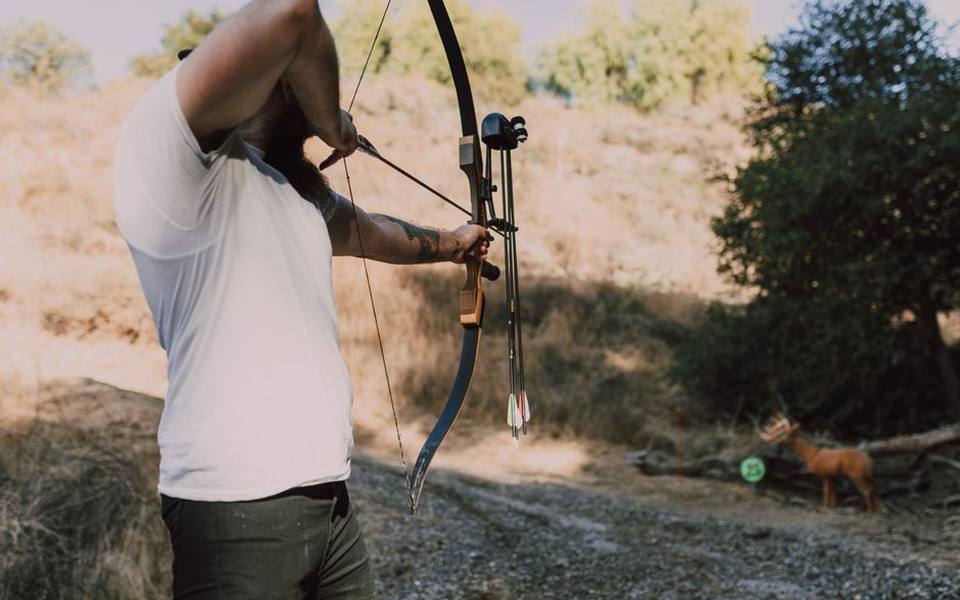
Practicing on realistic foam targets across varied angles on a 3D course reveals real-world arrow flight under hunting conditions. Many modern broadhead makers offer dedicated practice heads or locking screws that prevent mechanical blades from opening in foam. This feature lets you verify true flight dynamics without dulling your razor-sharp hunting blades on targets.
Always keep dedicated broadheads for target tuning and separate untouched heads for hunting. Even a single shot through a foam block can degrade a razor edge enough to reduce clean cutting through animal hide. Replace or re-sharpen your blades after range testing so every arrow in your hunting quiver is impeccably sharp before opening morning.
Making Your Final Decision Across Game Species and Setup Limits
Selecting the perfect broadhead requires an honest assessment of your archery setup, draw weight, and target game. For whitetail deer, wild hogs, and turkeys shot from tree stands or blinds at moderate ranges, modern mechanical heads deliver immense blood trails and quick recoveries. Their flight forgiveness helps bowhunters make clean ethical shots under cold weather or awkward hunting angles.
For heavier big game such as elk, moose, or bear—or for archers pulling lower draw weights—fixed blade broadheads remain unmatched. The rigid mechanical profile ensures every ounce of kinetic energy drives the cutting point deep into vital organs, regardless of whether you encounter heavy rib or shoulder bone along the way.
Take the time to test both configurations on the practice range before making a final commitment. Evaluate how your bow shoots with each style, verify your arrow's total weight and balance, and pick the broadhead that gives you complete confidence in making an accurate, ethical shot when the moment arrives.
Published 2026-09-21 · reviewed with each rebuild, last October 2026.
Find archery ranges & sports shops near you
The directory lists 38,975 archery ranges & sports shops by state and city — pick your state or use the “Near me” button in the header.
More guides
-
 Money
MoneyA Guide to Archery Range Fees and Lesson Costs
-
 Buying
Choosing Broadheads and Aiming for the Perfect Shot
-
 Service
DIY Bow Maintenance, Tuning, and Basic Repairs
-
 Buying
Choosing Sights and Rangefinders for Better Accuracy
-
 Buying
Essential Gear for Target Practice and Bowhunting Preparation
-
 Money
MoneyUnderstanding Bow Purchase and Restringing Costs: A Complete Pricing Guide
-
 Owning
Arrow Selection, Cutting, and Fletching at Home: A Complete Guide
-
 Safety
Bowhunting Shot Placement Guide for Deer and Turkey
-
 Buying
Complete Guide to Choosing the Best Crossbow Broadheads
-
 Money
MoneyHow Much Does Archery Cost? A Realistic Beginner Budget
-
 Buying
Choosing the Right Arrows and Field Points: Shaft Materials, Weights, and Tuning
-
 Buying
Best Archery Sets for Beginners: Complete Buyer Guide and Starter Tips
-
 Owning
Best Archery Targets and Backstops: 3D, Foam, Bag, and DIY Setup Guide
-
 Buying
Beginner Archery Buying Guide: Recurve, Compound, and Traditional Bows
-
 Buying
Bowfishing Equipment Guide: Bows, Reels, Arrows, and Rigging Setups
-
 Owning
Lighted Nocks and DIY Arrow Building: Fletching, Cutting, and Tuning
-
 Buying
Crossbow Bolts, Broadheads, and Cocking Devices: Complete Buyer's Guide
-
 Buying
Complete Arrow Selection Guide: Carbon Shafts, Spine, Length, and Brands
-
 Safety
Archery Protective Gear: Arm Guards, Chest Protectors, Tabs, and Slings
-
 Buying
Archery Quivers Buying Guide: Hip, Back, and Bow-Mounted Options
-
 Buying
Bow Release Aids Explained: Wrist Strap, Thumb Button, and Hinge Releases
-
 Owning
Compound Bow Tuning and Care: Strings, Wax, Stabilizers, and Cases
-
 Buying
Arrow Rests Compared: Whisker Biscuit, Cable-Driven, and Limb-Driven
-
 Safety
Archery Lessons, Proper Form, Range Etiquette, and Youth Programs
-
 Owning
Complete Guide to Single Pin Bow Sights and Sight Tapes
-
 Owning
Arrow Selection and DIY Arrow Building: Shafts, Fletching, and Tools
-
 Owning
Finding Archery Ranges, Pro Shops, Clubs, and Instructor Programs
-
 Buying
Archery Targets Guide: 3D Targets, Bags, Blocks, and DIY Backstops
-
 Buying
Archery Quivers Guide: Bow-Mounted, Hip, Back, and Crossbow Quivers
-
 Service
Bow Tuning and Setup: Paper Tuning, Arrow Rests, and Bow Maintenance
-
 Buying
Bowfishing Gear Guide: Bows, Rigs, Arrows, and Setup Options
-
 Owning
Essential Archery Accessories: Lighted Nocks, Arrow Pullers, and Arm Guards
-
 Buying
Archery Release Aids Guide: Thumb, Hinge, Wrist, and Mechanical Releases
-
 Buying
Essential Bowhunting Gear, Deer Supplies, and Gift Guide
-
 Buying
Crossbow Buying Guide: Matching Platforms, Bolts, Optics, and Fletching
-
 Buying
Beginner Bow & Arrow Starter Kits: How to Choose Your First Setup
-
 Owning
Traditional Archery, Longbows, and Primitive Gear
-
 Buying
Deer Hunting Bows: Comparing Recurve and Compound Setups, Finding Deals, and Studying Hunting Film
-
 Buying
Compound Bow Setup, Tuning, Form, and Equipment Guide
-
 Owning
Compound Bow Release Aids and Grip Tape: Enhancing Control and Consistency
-
 Service
Crossbow Maintenance: String Replacement and Scope Sighting Guide
-
 Owning
Broken Bow Cabin Rentals: Complete Beavers Bend Vacation Guide
-
 Safety
Broken Bow Lake Rentals: Complete Guide to Boats, ATVs, and Trail Gear