Finding the Right Setup for Your Shooting Style
Choosing how to carry your arrows directly influences your shot sequence, personal balance, and physical endurance during a long shooting session. Every archer needs a dependable archery arrow holder that keeps shafts secure, protects fletchings, and shields sharp points without rattling or getting tangled in brush. Rather than being a simple luggage accessory, the quiver dictates how cleanly you nock an arrow and whether extra weight sits on your riser, around your waist, or across your back.
Your ideal carrying system depends heavily on your archery discipline and personal mobility requirements. Target archers shooting standardized outdoor rounds or regular line rotations generally prefer waist-worn carriers that isolate all gear weight from the bow itself. In contrast, bowhunters and field archers navigating dense timber often want self-contained systems attached directly to the bow or tight against the torso. Balancing convenience against mechanical interference is always the primary engineering trade-off.
Before investing in any specific model, examine how your bow balances at full draw and during target acquisition. A heavy, fully loaded carrier bolted to one side of a lightweight riser introduces torque that you must counteract with muscular effort or offset stabilizer weights. Exploring different setups hands-on gives you immediate feedback about what feels natural in your shooting rhythm and what simply causes fatigue.
Target and Hip Quivers for Range Precision
Target archers shooting at an indoor range or on manicured tournament lines almost universally rely on hip carriers. A well-constructed belt quiver isolates arrow mass completely from the bow riser, keeping your sighting plane light, predictable, and unaffected by the gradual loss of arrow weight as you empty your kit during an end. Most models slide directly onto a stiff nylon utility belt, resting securely against the hip or thigh.
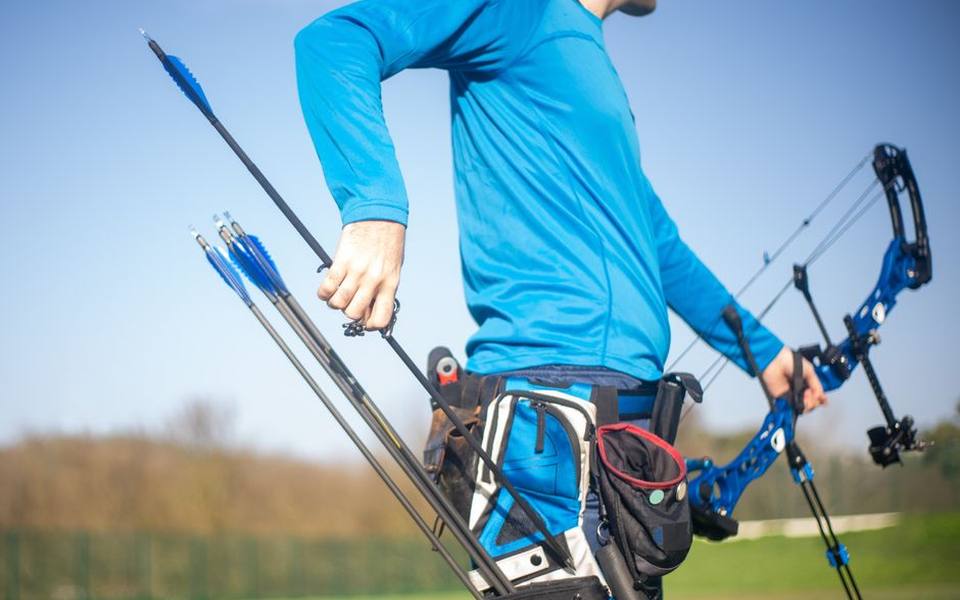
Within hip systems, shooters generally choose between forward-facing target quivers and reverse-facing field models. Forward-facing designs, historically popularized by tournament brands like Easton quiver lineups, angle shafts forward so you can quickly see and select specific arrows without looking down. Field designs angle arrows backward behind the shooter, keeping nocks and vanes clear of branches when walking tight trails or squeezing along crowded shooting benches.
Beyond carrying shafts, modern tournament hip carriers serve as complete workstations on your waist. They typically feature external tubes to keep arrow sets separated, deep zippered accessory pockets for scorecards and spare nocks, and dedicated clips for utility towels. High-density fabrics and molded plastics ensure that broad points or field tips do not puncture through the bottom during long days of active shooting.
Bow-Mounted Quivers and Riser Balance
Bow-mounted quivers are the standard choice for compound bowhunters who prioritize an all-in-one setup that moves silently through the field. Having arrows attached directly to the riser ensures you are always ready for a shot without wrestling with separate hip bags or shoulder straps. However, hanging several hundred grains of carbon and steel off the side of the riser naturally changes the bow's lateral center of gravity.
To combat this tilt, modern compact hunting designs, such as streamlined Fuse quivers and similar low-profile systems, mount arrows remarkably close to the riser. By tucking the hood and grippers tightly against the limbs and sight bracket, these systems minimize the lever arm that creates side torque. Many shooters find they can offset this slight imbalance with a small rear counter-stabilizer, resulting in a rock-solid sight picture in windy conditions.
Most bow-mounted systems feature quick-detach brackets that let you remove the entire unit with the flip of a cam lever. This gives you the versatility to hike with arrows on the bow and then quietly detach the quiver to hang it from a tree hook once settled into an elevated stand. Checking mounting tolerances at a local pro shop helps ensure the bracket does not introduce buzzes or loose hardware vibrations upon release.
One-Piece Versus Two-Piece Hunting Quivers
When configuring a compound bow, archers must decide between a removable one-piece system and a semi-permanent 2 piece quiver setup. A one-piece design utilizes a single rigid spine that locks into an upper riser bracket, allowing the entire carrier to be installed or removed in seconds. It represents the ultimate in modular convenience for archers who like to shoot their bows completely bare during practice sessions.
A two-piece carrier, by contrast, mounts directly into factory-machined hexagonal or circular sockets located at the top and bottom of the riser. Because the hood attaches at the top limb pocket and the arrow gripper attaches near the bottom limb pocket, the span between support points is significantly wider. This extended spread provides exceptional arrow stability, prevents long hunting shafts from flexing during the shot, and eliminates the single central pivot point where play might develop.
The trade-off with two-piece configurations is that they are not quickly detachable in the field. They are bolted firmly to the bow frame, making them the preferred platform for archers who plan to shoot exclusively with their quivers attached at all times. By integrating the quiver structure directly into the riser geometry, two-piece models often deliver the quietest shot profile with virtually zero post-shot harmonic buzz.
Minimalist Carriers for Lightweight Field Travel
Not every shooting scenario calls for carrying a half-dozen heavy arrows through rugged terrain. For backcountry hunters and minimalist spot-and-stalk archers, a compact three arrow quiver provides the ideal balance of sufficient firepower and reduced overall mass. Cutting carrying capacity down to three shafts significantly slashes wind drag, which is a major factor when shooting in open, blustery western basins.
These ultra-compact carriers are engineered with tight-tolerance grippers that accommodate micro-diameter hunting shafts without slippage. The protective hood is deliberately scaled down to cover only three broadheads, which reduces the surface area susceptible to catching sudden crosswinds at full draw. Many bowhunters find that three sharp broadheads cover any realistic hunting encounter while keeping their total bow package remarkably agile.
Shooting a minimalist carrier requires strict attention to weight management and gripper condition. Because there are fewer shafts to absorb vibration, high-grade rubberized hood inserts are essential to keep tips from rattling together. If you choose this route, verify that your broadheads—whether fixed-blade or mechanical—fit comfortably inside the compact hood without touching the inner walls or deploying prematurely.
Traditional Archery Quivers and Back Systems
Traditional archery quivers carry deep historical appeal while delivering practical function for barebow and instinctive shooters. The classic back quiver remains an iconic silhouette, resting diagonally across the shoulder blades with an adjustable chest strap. It allows the shooter to navigate brush without catching arrows on low shrubbery, keeping both hands and waist completely clear of equipment while walking a outdoor 3D course.
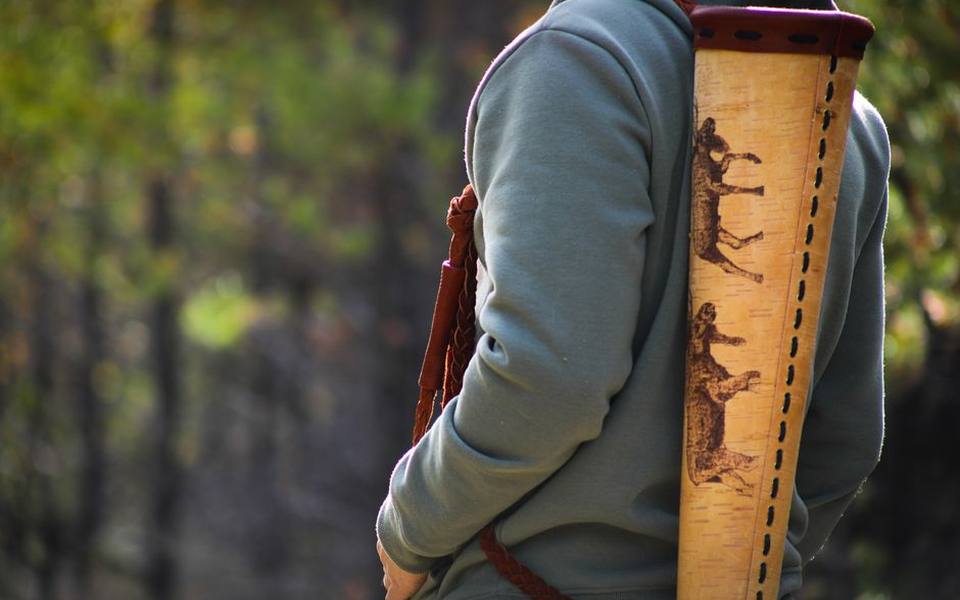
Mastering a back quiver requires learning the traditional over-the-shoulder blind draw. The archer reaches behind the head, grasps the shaft near the nock, and lifts it smoothly upward before bringing it over the bow handle. High-quality traditional models are crafted from heavy top-grain leather or stiff treated canvas, which keeps the mouth of the pouch open so shafts slide back inside without collapsing the opening.
Side and back quivers designed for traditional gear also offer substantial capacity, often holding a dozen or more arrows comfortably. Many traditional shooters use internal wool or sheepskin linings at the bottom of the pouch to muffle the sound of field tips striking together. While back quivers take patience to master without fumbling, they remain one of the most comfortable ways to carry arrows over rolling wilderness terrain.
Carrying Options for Recurves and Longbows
Shooting barebow recurves and stick bows introduces unique challenges when mounting arrows directly to the bow frame. Unlike modern compounds with machined accessory slots, a traditional bow lacks threaded mounting holes along its riser. Archers who need a bow-mounted longbow quiver generally depend on flexible strap-on rubber brackets that wrap tightly around the limb fades without marring delicate timber laminations.
A well-fitted recurve arrow holder must accommodate the flexing limbs without impeding the bow's working limb action or dampening limb recovery speed. Specialized limb-gripping carriers use contoured rubber blocks secured with heavy-duty elastic straps or knurled thumb screws. When seated properly just outside the riser fades, these carriers add beneficial physical weight that actually dampens hand shock and stabilizes the lightweight wooden handle.
Traditional bow quivers typically hold between four and six arrows, aligning shafts closely along the side of the limbs. Because traditional bows lack heavy stabilizers, having shafts mounted on the riser can significantly alter how the bow torques in your grip upon release. Take the time to test your barebow tune with the quiver both completely full and down to its final arrow to verify consistent arrow flight.
Crossbow Bolt Quivers and Mounting Layouts
Crossbow shooting has grown rapidly across North America, bringing specialized requirements for handling short, heavy projectiles. A crossbow bolt quiver is specifically designed to manage bolts that measure between sixteen and twenty-two inches, which are substantially shorter and stiffer than standard vertical bow arrows. Because crossbow bolts carry heavy kinetic energy and wide cutting broadheads, security inside the carrier is paramount.
Mounting configurations on crossbows differ noticeably from vertical compound setups. Standard systems, including factory assemblies found on popular packages like a crossbow quiver Barnett setup or similar contemporary models, mount horizontally beneath the main flight rail. This under-rail orientation keeps broadhead hoods pointed safely forward toward the stirrup while preventing bolts from protruding past the width of cocked limbs.
Some crossbow shooters prefer parallel mounting brackets that position bolts lengthwise along the side of the stock rather than perpendicular across the bottom. A parallel mount reduces snagging when passing through narrow ground blind doors or heavy brush, though it slightly widens the stock profile. Regardless of orientation, ensure your crossbow carrier features dual retention grippers to prevent short bolts from vibrating free under the extreme shock of modern high-poundage limbs.
Waist Pouches and Range Gear Integration
A practical arrow-carrying system works best when combined with complementary accessories that support your shooting routine. Target archers and bowhunters using mechanical releases frequently pair their belt carrier with a dedicated archery release pouch. These small, fleece-lined pouches clip directly onto your belt alongside your hip quiver, providing a safe, padded pocket to stash expensive handheld thumb buttons or hinge releases between shooting ends.
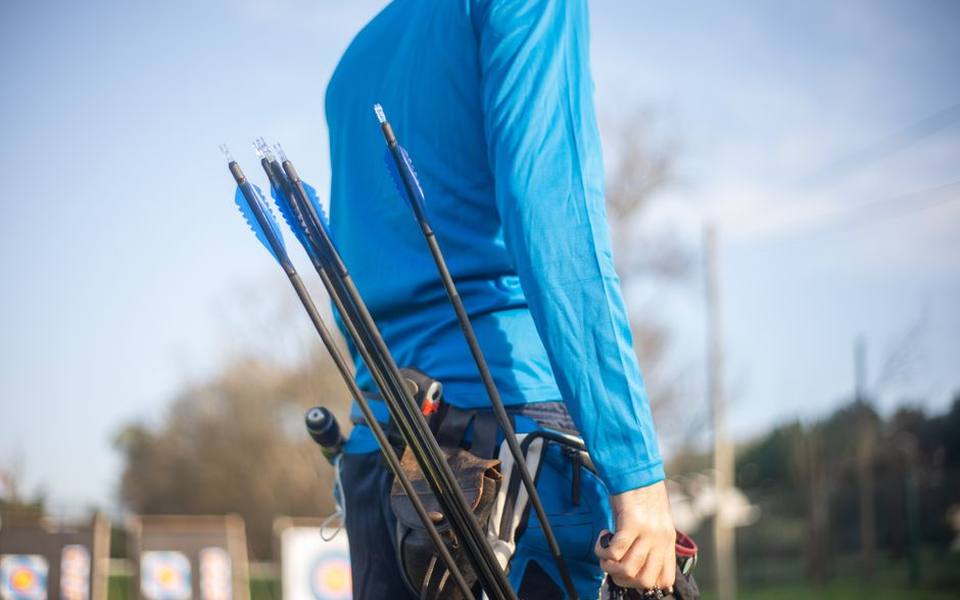
Drawing arrows smoothly from a waist setup becomes an automatic physical habit when your gear is properly arranged. When taking beginner lessons or classes for beginners, instructors emphasize keeping release aids clean and dirt-free, which a closed drawstring waist pouch handles effortlessly. Leaving a release on a shooting bench or slipping it into loose trouser pockets invites dirt contamination into delicate internal sears.
Modern target belts are rigid enough to distribute the combined weight of arrows, release pouches, arrow pullers, and sight cards without sagging. High-end tournament belts utilize dual-layer hook-and-loop construction: an inner belt threads through your trouser loops while a stiff outer belt holds all gear and attaches instantly over top. This modular system keeps your accessories arranged in the exact same spatial layout every time you step up to the line.
Maintaining Grippers, Hoods, and Hardware
A quiver requires regular inspection to ensure it remains safe, quiet, and reliable throughout the shooting season. The most critical component is the rubber or synthetic arrow gripper; over time, UV exposure, broadhead oils, and repeated friction can cause rubber fingers to dry out or lose elasticity. When grippers stretch, arrows slide forward under acceleration or drop out when walking through brush, creating significant safety hazards.
Hood liners also require periodic replacement or cleaning, especially if you hunt with razor-sharp mechanical or fixed broadheads. Traditional foam hood liners eventually get shredded by repeated insertion of blades, which reduces broadhead retention and dulls your cutting edges. Many modern manufacturers have replaced open-cell foam with molded rubber baffles that suspend broadhead tips in open air, eliminating blade contact entirely and protecting factory-honed edges.
Before traveling to an archery range or hunting camp, inspect all mounting screws, thumb knobs, and bracket clamps across all states and venues you visit. Vibration from high-energy bow shots naturally loosens threaded fasteners over time. Applying a small drop of medium-strength blue thread-locking compound to mounting bolts prevents sudden rattles and keeps your arrow carrier locked securely in place shot after shot.
Published 2026-09-21 · reviewed with each rebuild, last October 2026.
Find archery ranges & sports shops near you
The directory lists 38,975 archery ranges & sports shops by state and city — pick your state or use the “Near me” button in the header.
More guides
-
 Money
MoneyA Guide to Archery Range Fees and Lesson Costs
-
 Buying
Choosing Broadheads and Aiming for the Perfect Shot
-
 Service
DIY Bow Maintenance, Tuning, and Basic Repairs
-
 Buying
Choosing Sights and Rangefinders for Better Accuracy
-
 Buying
Essential Gear for Target Practice and Bowhunting Preparation
-
 Money
MoneyUnderstanding Bow Purchase and Restringing Costs: A Complete Pricing Guide
-
 Owning
Arrow Selection, Cutting, and Fletching at Home: A Complete Guide
-
 Safety
Bowhunting Shot Placement Guide for Deer and Turkey
-
 Buying
Complete Guide to Choosing the Best Crossbow Broadheads
-
 Money
MoneyHow Much Does Archery Cost? A Realistic Beginner Budget
-
 Buying
Choosing the Right Arrows and Field Points: Shaft Materials, Weights, and Tuning
-
 Buying
Best Archery Sets for Beginners: Complete Buyer Guide and Starter Tips
-
 Owning
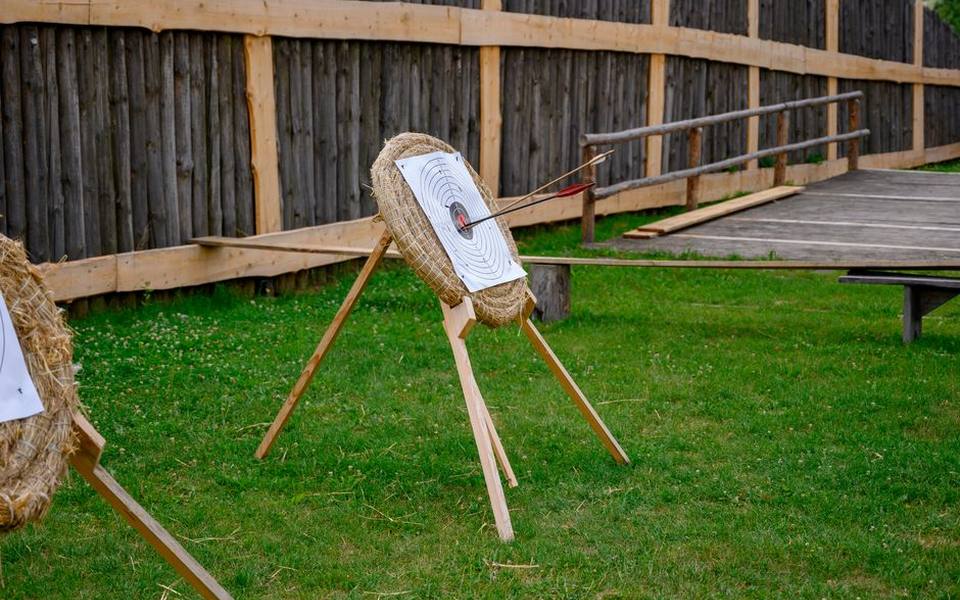
Best Archery Targets and Backstops: 3D, Foam, Bag, and DIY Setup Guide
-
 Buying
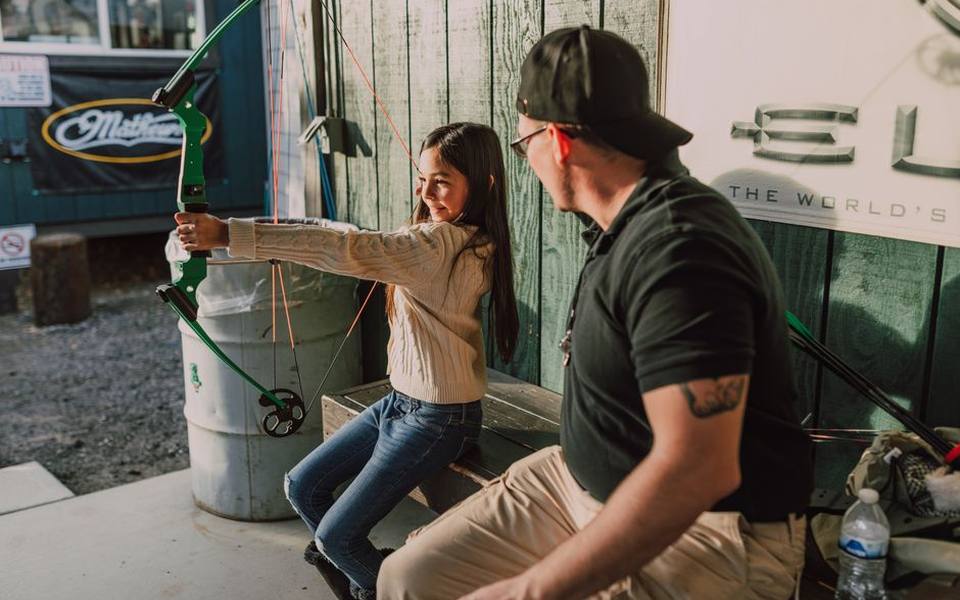
Beginner Archery Buying Guide: Recurve, Compound, and Traditional Bows
-
 Buying
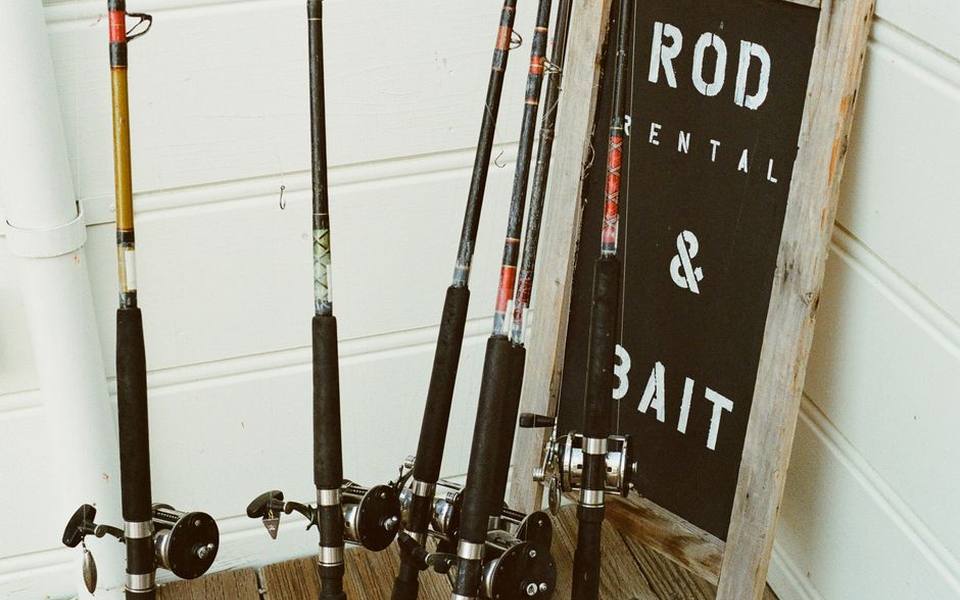
Bowfishing Equipment Guide: Bows, Reels, Arrows, and Rigging Setups
-
 Owning
Lighted Nocks and DIY Arrow Building: Fletching, Cutting, and Tuning
-
 Buying
Crossbow Bolts, Broadheads, and Cocking Devices: Complete Buyer's Guide
-
 Buying
Complete Arrow Selection Guide: Carbon Shafts, Spine, Length, and Brands
-
 Safety
Archery Protective Gear: Arm Guards, Chest Protectors, Tabs, and Slings
-
 Buying
Archery Quivers Buying Guide: Hip, Back, and Bow-Mounted Options
-
 Buying
Bow Release Aids Explained: Wrist Strap, Thumb Button, and Hinge Releases
-
 Owning
Compound Bow Tuning and Care: Strings, Wax, Stabilizers, and Cases
-
 Buying
Arrow Rests Compared: Whisker Biscuit, Cable-Driven, and Limb-Driven
-
 Safety
Archery Lessons, Proper Form, Range Etiquette, and Youth Programs
-
 Owning
Complete Guide to Single Pin Bow Sights and Sight Tapes
-
 Owning
Arrow Selection and DIY Arrow Building: Shafts, Fletching, and Tools
-
 Owning
Finding Archery Ranges, Pro Shops, Clubs, and Instructor Programs
-
 Buying
Best Hunting Broadheads: Fixed Blade vs Mechanical Broadheads
-
 Buying
Archery Targets Guide: 3D Targets, Bags, Blocks, and DIY Backstops
-
 Service
Bow Tuning and Setup: Paper Tuning, Arrow Rests, and Bow Maintenance
-
 Buying
Bowfishing Gear Guide: Bows, Rigs, Arrows, and Setup Options
-
 Owning
Essential Archery Accessories: Lighted Nocks, Arrow Pullers, and Arm Guards
-
 Buying
Archery Release Aids Guide: Thumb, Hinge, Wrist, and Mechanical Releases
-
 Buying
Essential Bowhunting Gear, Deer Supplies, and Gift Guide
-
 Buying
Crossbow Buying Guide: Matching Platforms, Bolts, Optics, and Fletching
-
 Buying
Beginner Bow & Arrow Starter Kits: How to Choose Your First Setup
-
 Owning
Traditional Archery, Longbows, and Primitive Gear
-
 Buying
Deer Hunting Bows: Comparing Recurve and Compound Setups, Finding Deals, and Studying Hunting Film
-
 Buying
Compound Bow Setup, Tuning, Form, and Equipment Guide
-
 Owning
Compound Bow Release Aids and Grip Tape: Enhancing Control and Consistency
-
 Service
Crossbow Maintenance: String Replacement and Scope Sighting Guide
-
 Owning
Broken Bow Cabin Rentals: Complete Beavers Bend Vacation Guide
-
 Safety
Broken Bow Lake Rentals: Complete Guide to Boats, ATVs, and Trail Gear