Why Archery Protective Gear Matters for Every Archer
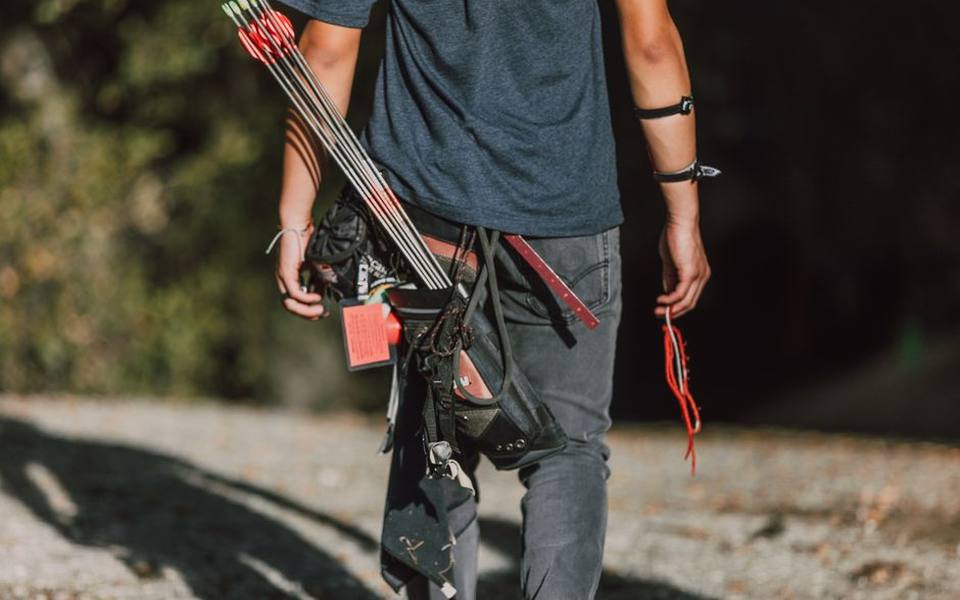
Archery protective gear is designed to create a predictable, interference-free path for the bowstring while preventing painful contact with your body and clothing. Many beginners assume that wearing an arm guard or chest protector is merely a crutch for poor shooting form, but even Olympic athletes and seasoned field archers rely on these tools daily. Bowstrings travel at extreme velocities, and even minor contact with bare skin or a loose sleeve can ruin an arrow's flight and leave severe bruising.
Beyond physical protection, safety equipment provides vital psychological security on the shooting line. When you know an accidental string slap will not hurt your forearm, you naturally avoid flinching, twisting your wrist, or collapsing your bow shoulder upon release. Consistent shooting form relies on muscle memory and repeatable alignment, both of which erode quickly when anticipation of pain forces defensive micro-adjustments.
Whether you are getting started at lessons or classes for beginners or preparing for competitive target rounds, selecting the proper protective accessories is just as critical as choosing your bow and arrows. Understanding how each piece works, where it fits, and what material suits your shooting style will save you from painful mistakes during your initial sessions.
Understanding Arm Guards and Forearm Protectors
An archery forearm guard acts as a smooth, firm barrier strapped along the inside of your bow arm to shield your skin from string slap. When a bowstring is released, it accelerates forward past its resting brace height before oscillating laterally. If your stance, grip angle, or shoulder position brings your forearm into that oscillation path, the string transfers substantial kinetic energy directly into your soft tissue.
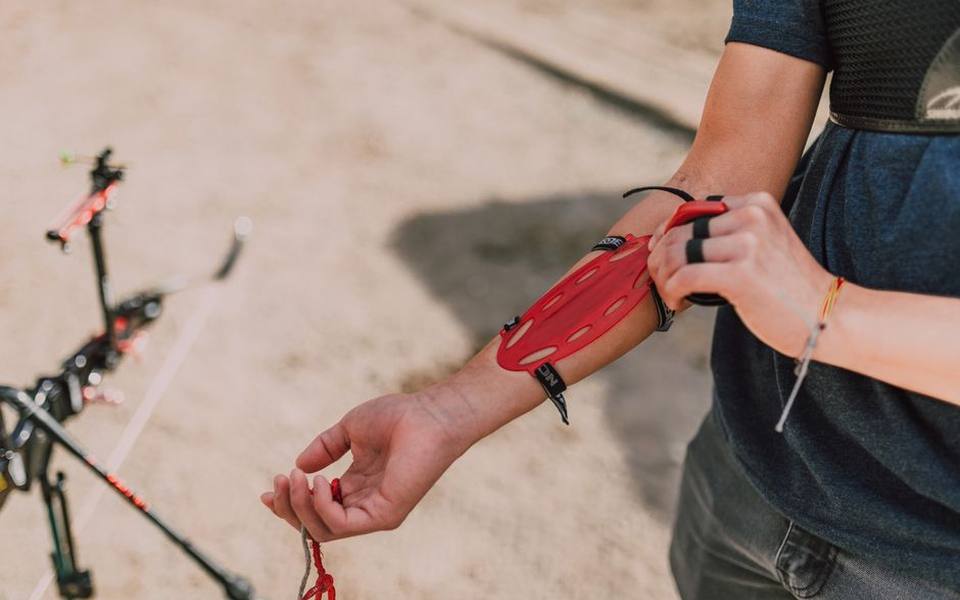
Modern arm guards are typically constructed from molded thermo-plastic, reinforced nylon, or rigid polycarbonate. These materials provide a slick surface that allows the string to brush past with minimal friction, preserving arrow trajectory rather than absorbing momentum. Many contemporary designs feature ventilated channels or skeletal cutouts to allow airflow, which prevents sweat buildup during extended practice in warm conditions.
Bow arm protectors vary primarily by length and coverage area. Short guards measure around five to seven inches and protect only the mid-to-lower forearm, catering to experienced archers who maintain consistent elbow rotation. Full-length guards extend past the elbow joint to protect both the forearm and the inner bicep, making them an excellent choice for novices working to develop proper bow shoulder alignment.
Securing an arm protector involves elastic or webbing straps secured by buckles, hook-and-loop fasteners, or quick-release clips. Straps should sit snug enough to prevent slipping during the draw cycle without restricting blood circulation or pinch the skin when flexing your bow arm.
Traditional Bracers and Leather Arm Protection
The traditional archery bracer represents the historical predecessor to modern plastic forearm guards, with functional roots tracing back centuries. Traditional archers shooting longbows and barebow recurves frequently favor heavy leather guards for their natural aesthetic, durability, and quiet operation. Unlike stiff plastic that can produce an audible clack if struck by a bowstring, dense leather dampens sound effectively.
An archery arm guard made of leather is typically crafted from vegetable-tanned steer hide, latigo, or supple harness leather. Thicker saddle leathers ranging from five to seven ounces provide enough rigidity to deflect heavy bowstrings without deforming, while softer oil-tanned leathers offer immediate comfort without a prolonged break-in period. Over time, high-quality leather molds to the unique contours of your forearm, creating an exceptionally comfortable custom fit.
Fastening systems on traditional bracers differ significantly from modern synthetic models. Many use elastic shock cord laced through antique brass eyelets, while others feature traditional leather thongs paired with horn buttons or speed hooks. While lacing a bracer takes slightly longer than snapping plastic buckles, it ensures uniform tension along the entire length of your arm.
Leather guards require basic leather care to prevent cracking from sweat and humidity. Applying an occasional coat of beeswax balm or neatsfoot oil keeps the hide supple and water-resistant, ensuring your gear lasts through seasons of outdoor shooting and varying weather conditions.
Proper Fit and Placement on the Bow Arm
Positioning your archery bow arm guard correctly is essential for both comfort and clean arrow flight. The guard must sit squarely over the fleshy inner side of your forearm, extending from roughly an inch below your elbow crease down toward your wrist joint. Placing the guard too close to the wrist limits joint mobility, while pushing it too high leaves vulnerable forearm tissue completely exposed.
To check your alignment before shooting, extend your bow arm naturally into your shooting position and rotate your elbow joint outward so it points vertically rather than inward toward the string path. The guard should face inward toward your chest, directly centered along the plane where string oscillation occurs. If the guard twists outward toward the top of your arm, it will offer zero protection.
Interference is another crucial consideration when adjusting straps. Ensure that strap buckles, loose strap ends, and protruding adjustment hardware face outward, away from your body and string line. If a loose strap tail catches the bowstring during release, it will severely deflect the arrow and can fray the string fibers over repeated shots.
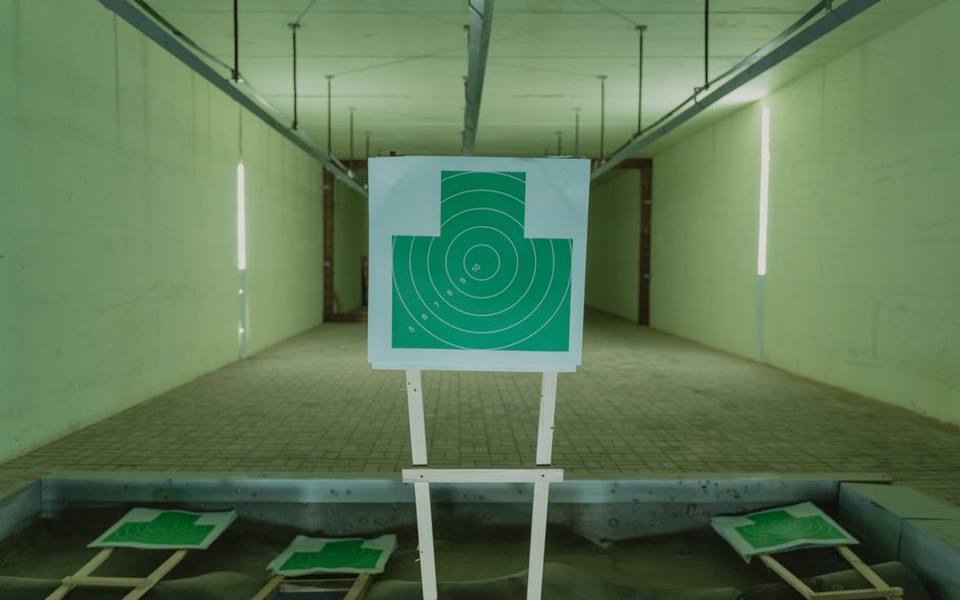
If you regularly test your gear at an indoor range, take a moment in front of a mirror to inspect your bow arm at full draw. Verifying that your guard lies flat without pinching clothing creates peace of mind before you release your first arrow of the day.
Chest Protectors and Upper Body Clearance
An archery chest protector covers the chest on the bow-arm side to keep loose clothing compressed and establish a frictionless surface for the bowstring. Primarily used by recurve and barebow shooters, this piece of gear plays a vital dual role in shot consistency and safety. During the final anchor and release phases, the string rests close to the archer's torso, creating potential contact points.
Chest guards are generally constructed from breathable synthetic mesh reinforced with flexible, low-friction nylon or molded plastic panels. The mesh body wraps around the chest and fastens under the opposite arm with an adjustable elastic strap, while the smooth panel covers the pectoral muscle and collarbone area. This ensures the bowstring slides effortlessly if contact occurs during the shot.
Beyond shielding the body, a chest protector prevents loose shirts, winter jackets, and button-down plackets from snagging the bowstring. Even a tiny fold of fabric brushing the string can rob your arrow of velocity and shift your point of impact several rings off target. For female archers and archers with broader chests, this protection is especially critical for maintaining comfortable, repeatable posture.
Adjusting your chest guard properly requires finding a balance between security and breathing room. The unit should lie completely flat against your shirt without bunching, but it should not restrict full diaphragm expansion when drawing your bow to full capacity.
Managing Traditional Archery Clothing and Layering
Traditional archery clothing choices present distinct clearance challenges that modern form-fitting athletic wear generally avoids. Longbow and traditional recurve shooters frequently wear heavy wool flannels, canvas field shirts, or insulated coats during cold-weather shoots. These bulky fabrics expand into the bowstring path, dramatically increasing the risk of string snag and erratic arrow flight.
When shooting in layered garments, an extended bracer or full-length forearm sleeve helps compress bulky sleeve material along your forearm. Many traditional archers utilize elastic sleeve garters or compression bands around the forearm and bicep to pin back loose fabric before donning their leather arm protector.
Loose chest fabric from jackets can be managed by wearing a streamlined vest over your layers or applying an archery chest protector beneath outer coats. Keeping collars zipped down flat and choosing buttonless garments prevents strings from catching on rigid plastic zippers or heavy horn buttons common on outdoor apparel.
Before heading out to a challenging 3D course, always take several practice shots while wearing your full hunting or cold-weather wardrobe. Discovering that a jacket cuff catches your bowstring is far better resolved on the practice bale than in the middle of a competition.
Finger Tabs Versus Shooting Gloves
Direct string contact on bare fingers will cause nerve irritation, blisters, and inconsistent releases, making finger protection mandatory for recurve and traditional archers. An archery finger tab consists of a flat leather or synthetic shield that rests between your three drawing fingers and the bowstring. Tabs provide a smooth, uniform surface that minimizes string friction as your fingers slip away at release.
Target archers almost universally favor finger tabs over gloves due to the precise control and adjustability they offer. High-performance tabs feature layers of premium cordovan leather backed by soft suede, providing slick release characteristics and excellent thermal resistance. Many target models incorporate rigid aluminum or brass palm plates, finger spacers to prevent pinching the nock, and adjustable shelf ledges to support steady jawbone anchoring.
Shooting gloves, by contrast, offer three reinforced leather finger stalls connected to a wrist strap. Traditional archers frequently prefer gloves because they remain permanently attached to the hand, allowing free finger movement for pulling arrows, scoring, and moving through dense brush without misplacing gear.
Choosing between a tab and a glove largely depends on your shooting discipline and personal preference. Target shooters benefit from the rigid palm support and slick cordovan face of a modern tab, while field archers seeking simple convenience often gravitate toward sturdy leather shooting gloves.
The Mechanics of Finger Slings and Wrist Slings
A finger sling is a simple yet indispensable accessory designed to keep your bow from crashing to the floor after release. Correct archery form dictates that you do not grip the bow handle tightly; instead, the riser rests passively against the thumb pad of a completely relaxed bow hand. When the string is loosed, the bow naturally leaps forward toward the target, and the sling catches it before it drops.
Finger slings typically consist of a short cord or elastic band with two adjustable loops. One loop wraps around the archer's thumb, the cord passes around the front of the bow riser, and the opposite loop secures around the index or middle finger. When adjusted to the proper length, the sling hangs completely slack at full draw, engaging only after the arrow has cleared the riser.
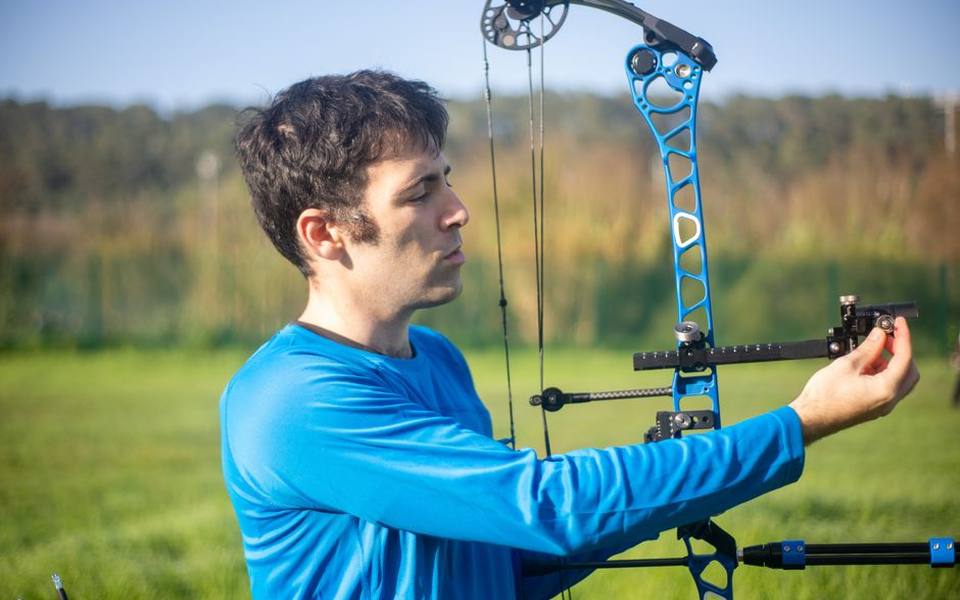
Compound archers generally use a wrist sling rather than a finger sling. A wrist sling mounts directly behind the front stabilizer bushing on the riser and wraps around the shooter's wrist. Because compound bows are heavier and feature different balance dynamics, a fixed wrist strap provides dependable retention without placing tension on the archer's fingers.
Attempting to catch the bow with your fingers as it releases is a common error called bow grabbing, which introduces severe torque into the shot. Trusting your sling allows your bow hand to remain entirely relaxed, producing cleaner arrow flight and tighter target groupings.
Caring for Protective Gear and Maintaining Safety
Regular maintenance of your protective equipment ensures reliable safety and prevents sudden equipment failure on the shooting line. Elastic straps on arm guards and chest protectors gradually lose tension over time due to UV exposure, sweat absorption, and continuous stretching. Check your straps periodically for frayed stitching or brittle elastic, and replace worn cordage before it snaps mid-draw.

Leather components require routine inspection to verify that the shooting surface remains smooth and free of gouges. A finger tab with rough, worn-out leather will cause string drag, leading to erratic vertical spreads on your target face. Applying specialized leather conditioner keeps tabs pliable, while lightly brushing cordovan leather with a soft toothbrush restores its natural nap.
Hardware like plastic snaps, friction buckles, and metal eyelets should be kept clean of dirt and debris. A quick rinse with mild soapy water followed by thorough air drying is usually sufficient for synthetic arm guards and mesh chest protectors after sweaty training sessions.
If you notice persistent wear marks on your arm guard or chest protector, consider consulting a coach or visiting an experienced technician at a local pro shop. Heavy impact marks in a single concentrated spot often indicate subtle posture or grip issues that can be corrected with minor technique adjustments.
Assembling Your Complete Protective Kit
Building a well-matched protective kit requires considering your bow style, personal anatomy, and shooting environment. For modern target recurve archery, a complete setup typically includes a low-profile synthetic arm guard, a breathable mesh chest protector, a cordovan finger tab with an anchor ledge, and a lightweight finger sling. This combination minimizes string interference while maximizing shooting comfort.
Traditional archers generally prefer a streamlined aesthetic, opting for a durable leather bracer, a shooting glove or simple split-finger tab, and loose clothing secured with sleeve garters. Compound archers, who release the string using a mechanical trigger release rather than fingers, typically bypass chest guards and finger tabs entirely, relying solely on an arm guard and an adjustable wrist sling.
Trying on protective gear in person allows you to verify sizing before spending money on ill-fitting accessories. Sizing charts provide general guidance, but strap length, palm plate width, and chest contouring vary noticeably across different manufacturers and body types.
Investing in reliable, comfortable safety gear from day one eliminates unnecessary distractions and physical discomfort. When your forearm, fingers, and chest are properly protected, you can focus all your energy on perfecting your draw cycle, mastering your sight picture, and enjoying your time on the range.
Published 2026-09-21 · reviewed with each rebuild, last October 2026.
Find archery ranges & sports shops near you
The directory lists 38,975 archery ranges & sports shops by state and city — pick your state or use the “Near me” button in the header.
More guides
-
 Money
MoneyA Guide to Archery Range Fees and Lesson Costs
-
 Buying
Choosing Broadheads and Aiming for the Perfect Shot
-
 Service
DIY Bow Maintenance, Tuning, and Basic Repairs
-
 Buying
Choosing Sights and Rangefinders for Better Accuracy
-
 Buying
Essential Gear for Target Practice and Bowhunting Preparation
-
 Money
MoneyUnderstanding Bow Purchase and Restringing Costs: A Complete Pricing Guide
-
 Owning
Arrow Selection, Cutting, and Fletching at Home: A Complete Guide
-
 Safety
Bowhunting Shot Placement Guide for Deer and Turkey
-
 Buying
Complete Guide to Choosing the Best Crossbow Broadheads
-
 Money
MoneyHow Much Does Archery Cost? A Realistic Beginner Budget
-
 Buying
Choosing the Right Arrows and Field Points: Shaft Materials, Weights, and Tuning
-
 Buying
Best Archery Sets for Beginners: Complete Buyer Guide and Starter Tips
-
 Owning
Best Archery Targets and Backstops: 3D, Foam, Bag, and DIY Setup Guide
-
 Buying
Beginner Archery Buying Guide: Recurve, Compound, and Traditional Bows
-
 Buying
Bowfishing Equipment Guide: Bows, Reels, Arrows, and Rigging Setups
-
 Owning
Lighted Nocks and DIY Arrow Building: Fletching, Cutting, and Tuning
-
 Buying
Crossbow Bolts, Broadheads, and Cocking Devices: Complete Buyer's Guide
-
 Buying
Complete Arrow Selection Guide: Carbon Shafts, Spine, Length, and Brands
-
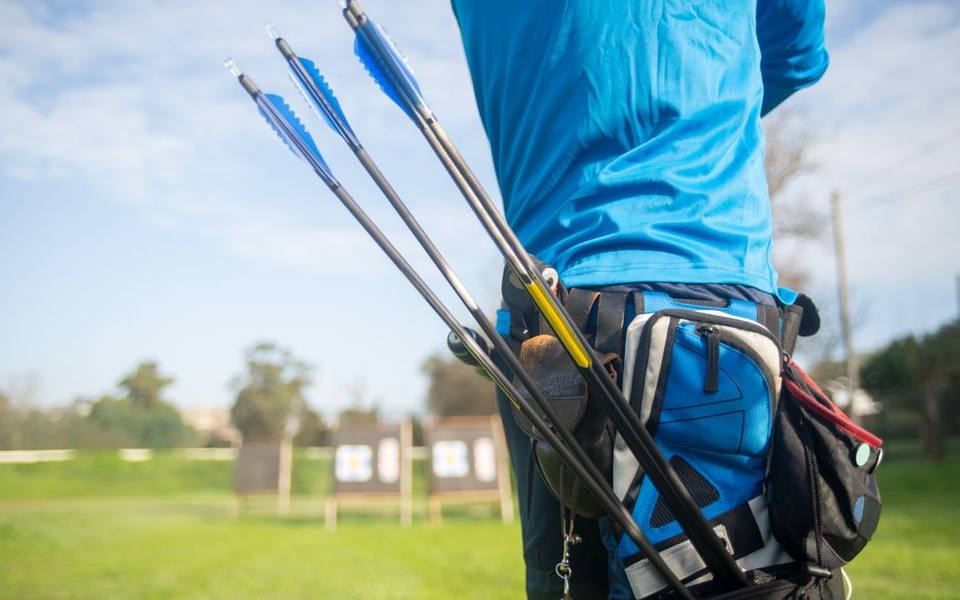 Buying
Archery Quivers Buying Guide: Hip, Back, and Bow-Mounted Options
-
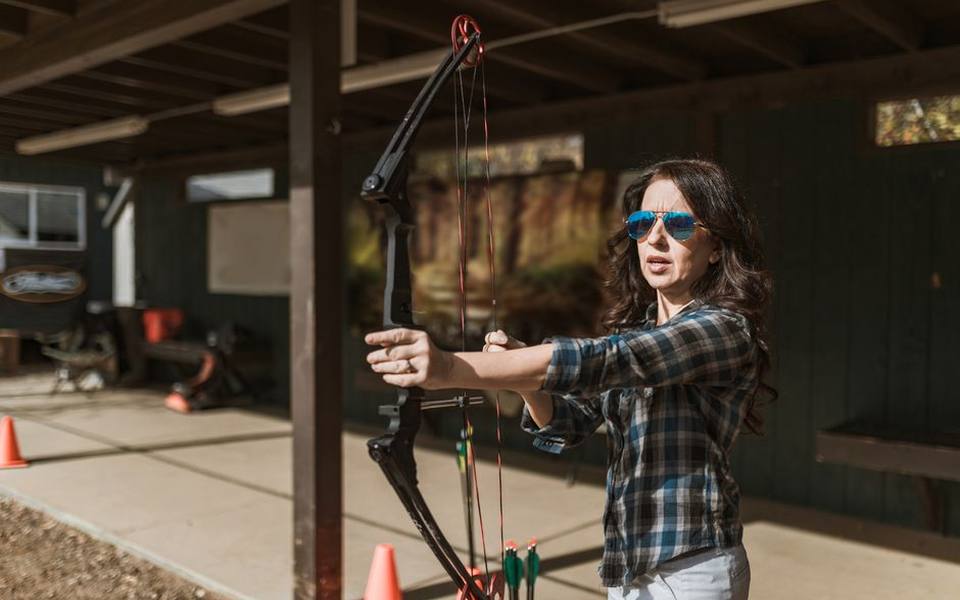 Buying
Bow Release Aids Explained: Wrist Strap, Thumb Button, and Hinge Releases
-
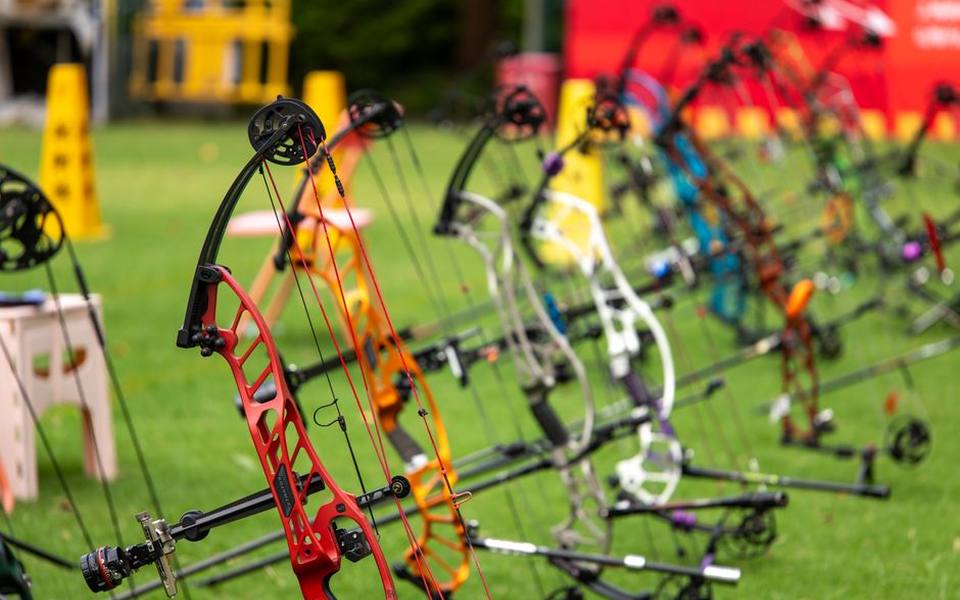 Owning
Compound Bow Tuning and Care: Strings, Wax, Stabilizers, and Cases
-
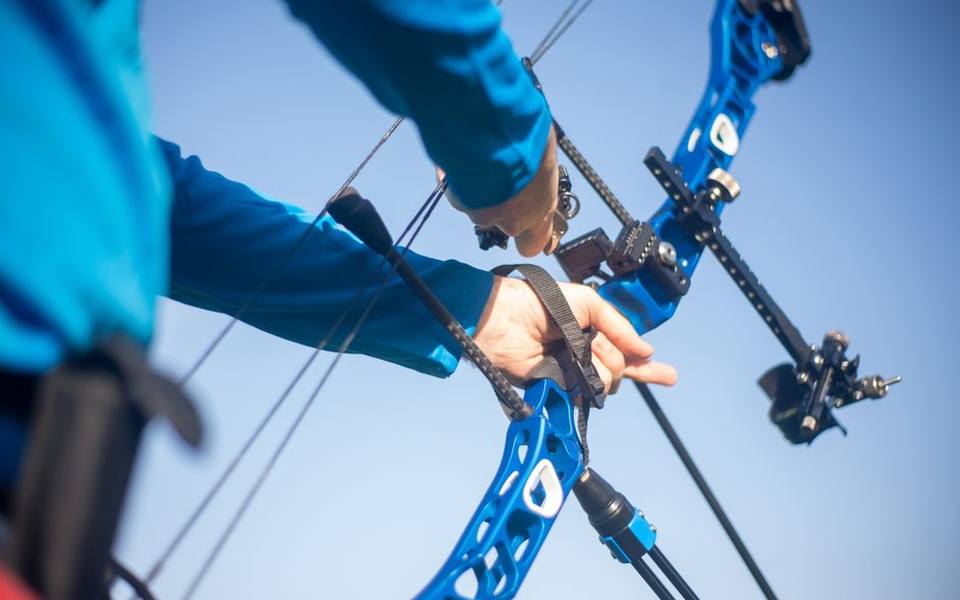 Buying
Arrow Rests Compared: Whisker Biscuit, Cable-Driven, and Limb-Driven
-
 Safety
Archery Lessons, Proper Form, Range Etiquette, and Youth Programs
-
 Owning
Complete Guide to Single Pin Bow Sights and Sight Tapes
-
 Owning
Arrow Selection and DIY Arrow Building: Shafts, Fletching, and Tools
-
 Owning
Finding Archery Ranges, Pro Shops, Clubs, and Instructor Programs
-
 Buying
Best Hunting Broadheads: Fixed Blade vs Mechanical Broadheads
-
 Buying
Archery Targets Guide: 3D Targets, Bags, Blocks, and DIY Backstops
-
 Buying
Archery Quivers Guide: Bow-Mounted, Hip, Back, and Crossbow Quivers
-
 Service
Bow Tuning and Setup: Paper Tuning, Arrow Rests, and Bow Maintenance
-
 Buying
Bowfishing Gear Guide: Bows, Rigs, Arrows, and Setup Options
-
 Owning
Essential Archery Accessories: Lighted Nocks, Arrow Pullers, and Arm Guards
-
 Buying
Archery Release Aids Guide: Thumb, Hinge, Wrist, and Mechanical Releases
-
 Buying
Essential Bowhunting Gear, Deer Supplies, and Gift Guide
-
 Buying
Crossbow Buying Guide: Matching Platforms, Bolts, Optics, and Fletching
-
 Buying
Beginner Bow & Arrow Starter Kits: How to Choose Your First Setup
-
 Owning
Traditional Archery, Longbows, and Primitive Gear
-
 Buying
Deer Hunting Bows: Comparing Recurve and Compound Setups, Finding Deals, and Studying Hunting Film
-
 Buying
Compound Bow Setup, Tuning, Form, and Equipment Guide
-
 Owning
Compound Bow Release Aids and Grip Tape: Enhancing Control and Consistency
-
 Service
Crossbow Maintenance: String Replacement and Scope Sighting Guide
-
 Owning
Broken Bow Cabin Rentals: Complete Beavers Bend Vacation Guide
-
 Safety
Broken Bow Lake Rentals: Complete Guide to Boats, ATVs, and Trail Gear