Establishing a routine compound bow maintenance habit
A modern compound bow operates under extreme tension, storing considerable kinetic energy within the limbs, riser, and cabling every time you draw. Keeping that system consistent requires simple, predictable upkeep rather than waiting for a mechanical issue to reveal itself during practice. Most archers discover that inspecting axle clips, cam channels, cable slides, and string fibers every couple of weeks prevents minor friction issues from snowballing into expensive repairs or sudden flight deviations.
Over time, exposure to humidity changes, field grit, and general vibration can alter how cams rotate or how serving material sits around tight bends. Establishing an inspection habit before each shooting session lets you detect fraying fibers or loose sight screws before you release an arrow. A quick five-minute look over your riser, limb pockets, and accessories ensures your setup remains safe and keeps your sight marks repeatable across months of regular target practice.
When an archer shoots weekly, subtle wear patterns develop gradually across high-wear points like the cable slide track and d-loop knot. Catching these changes early saves the headache of diagnosing erratic arrow flight during a competition or hunting trip. Routine care is primarily about preserving string health, maintaining alignment through paper and broadhead checks, and securing the system inside a dependable case between range trips.
Keeping string fibers healthy with proper waxing
Synthetic bowstring strands dry out from dust exposure, sunlight, and friction as they pass through the shoot cycle. Applying bow string wax lubricates individual fibers of high-modulus polyethylene, preventing them from rubbing dry and fuzzing along the main body. A dry harness loses flexibility and becomes vulnerable to premature abrasion, which can eventually destabilize cam timing or alter overall draw length by minuscule amounts over several months of heavy shooting.
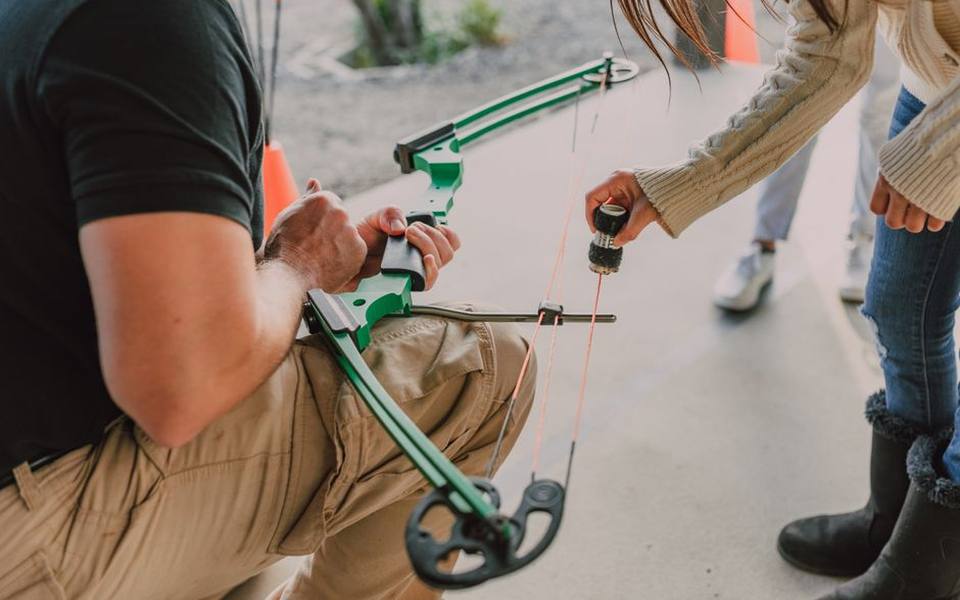
The process of waxing bow string bundles is straightforward and requires only a small amount of product applied directly along the exposed strands. Rub the stick lightly against the fiber runs, taking care to skip the tightly wrapped end servings and center serving where excess wax can collect grit or cause the nock to slip. Once applied, use clean fingers or a small scrap of soft leather to rub the wax vigorously into the strands, generating mild friction heat that melts the lubricant deep into the bundle core.
After the fibers absorb the lubricant, wipe away any sticky excess on the surface using a dry lint-free cloth or clean microfiber towel. Excess compound left sitting on the outside of the bundle simply gathers dirt, dust, and pine needles when you shoot outdoors. For archers practicing once or twice a week, thoroughly conditioning the harness once a month typically provides sufficient protection against humidity swings and fiber wear.
When to consider custom and aftermarket strings
Factory-installed bowstrings on entry-level or mid-tier compounds generally perform well out of the box, but they may settle over the first few hundred shots. This break-in period can cause slight peep rotation or minor cam timing shift as the strands stretch under tension. Archers seeking absolute consistency often turn to custom bow strings built with pre-stretched fibers and tighter serving tension to eliminate rotation issues right from the very first shot.
Investing in aftermarket bow strings allows you to specify exact strand counts, serving materials, and color combinations matched to your draw weight and cam design. Quality custom archery strings undergo dedicated stretching processes under several hundred pounds of sustained tension before the servings are applied. This level of build precision keeps your peep sight pointing directly at your eye through every stage of the draw cycle, regardless of summer heat or winter cold.
If you notice visible strand fraying under your cam servings, broken fibers near the teardrops, or persistent peep twist that requires constant correction, it is time for replacement. Visiting a knowledgeable technician at an archery pro shop makes string swapping painless, as they can measure exact axle-to-axle lengths and cam synchronization on a dedicated bench press while seating your new harness.
Using a portable bow press for basic adjustments
Major harness work usually belongs on a full-size shop bench, but a compact portable bow press gives archers independence for field adjustments and minor tweaks. These tools use ratchets, cables, or threaded rods to compress the limb tips gently, relaxing the harness just enough to install peep sights, adjust twists in the d-loop, or swap out worn cable slides. Carrying one in your gear trunk can save a weekend shoot when an emergency harness adjustment arises.
Operating any portable press requires strict adherence to limb design guidelines, particularly on modern compounds featuring past-parallel limb geometry. Compressing limbs unevenly or placing fingers incorrectly against the limb tips can slip under load, damaging limb pockets or bending delicate cam tracks. Always inspect the tool components for cable fraying or stripped threads before applying any mechanical pressure to high-poundage compound limbs.
Before compressing the bow, confirm that the press fingers match your limb profile, whether you shoot split-limb or solid-limb construction. Turn the tensioning mechanism smoothly and apply only enough compression to relieve tension on the string loops without over-flexing the composite glass. If you feel excessive resistance or the limbs start shifting laterally, back off immediately and seek assistance from a technician with a standardized commercial bench press.
Achieving clean arrow flight through paper tuning
True arrow flight starts by ensuring the nock end of the arrow follows the point directly through the power stroke without wobbling. The standard baseline for evaluating this launch geometry is paper tuning bow setups at close range, typically between five and eight feet from the paper rack. By shooting through taut paper into a safe backstop, the resulting tear reveals exactly how your arrow leaves the rest and riser.
A clean bullet hole—showing the point hole with three small, neat vane slices—indicates your rest height, center shot, and nock point are operating in balance. A high or low tear signals that your d-loop position or arrow rest elevation needs adjustment to level out the shaft during launch. Meanwhile, a tear showing the nock kicking left or right points toward horizontal rest alignment, slight cam lean, or shooter grip torque twisting the riser at release.
Diagnosing paper tears requires methodical, one-variable-at-a-time adjustments rather than shifting your sight pins to chase the problem. For archers who lack dedicated garage space, visiting local indoor archery ranges provides controlled, draft-free conditions where you can set up a paper frame and adjust rests without wind gust interference skewing your paper tear interpretation.
Fine tuning broadheads for field point accuracy
Target points offer streamlined aerodynamics that can hide tiny flight flaws, whereas broadhead blades act like steering wings on the front of an arrow shaft. When broadheads plane away from your target point groups at moderate distances, your bow system requires fine-tuning to bring the two impacts together. Dedicated tuning for broadheads ensures that mechanical and fixed-blade hunting tips hit identically to practice field points out to your maximum effective range.
The standard method involves comparing groups of field points against broadheads at thirty or forty yards while keeping your sight setting untouched. If your fixed heads consistently land to the right of your field points, tiny micro-adjustments to the arrow rest toward the left often bring the groups together. Vertical splits between points are solved by slightly raising or lowering the arrow rest or moving the d-loop in millimeter increments.
Before adjusting hardware, check arrow straightness and spin-test every single shaft with the hunting tip installed on an arrow spinner. A wobbling ferrule or slightly misaligned insert creates planing that no amount of rest adjustment can fix. Practicing broadhead shots on dedicated targets, perhaps on the walk-through lanes of regional 3D archery courses before the hunting opener, gives you complete confidence in your terminal arrow flight.
Stabilizer mechanics and sight picture balance
A compound bow naturally wants to pivot in the hand during the draw and jump forward upon string release. Adding an external bow stabilizer shifts mass away from the riser pivot point, dramatically increasing the bow's moment of inertia and slowing down pin float. When your sight pin drifts through the bullseye slowly and predictably rather than darting erratically, pulling a clean, surprise shot becomes much more manageable.
Stabilizers work on the exact principle of a tightrope walker holding a long balancing pole to resist quick rolling movements. In target archery, long front rods paired with offset back or side bars allow shooters to offset the weight of bulky sights, quivers, and arrow rests hanging off the right or left of the riser. By adding individual ounce weights to threaded ends, you can adjust the balance until the bubble level settles in the center effortlessly.
Finding your ideal stabilizer balance requires shooting ends with varying weight stacks to observe how your pin pattern behaves on target. If the sight pin tends to drop out the bottom of the target, you likely have too much weight out front; if it wanders aimlessly high, you need more front forward bias. For beginners working through these balance fundamentals, scheduling sessions through archery ranges with lessons offers instant feedback from coaches who recognize stabilization fatigue.
Configuring stabilizers for hunting and practical shooting
Target archers routinely run thirty-inch front carbon rods, but bowhunters operate in dense timber, brush blinds, and tight tree stands where maneuverability takes priority. Choosing an effective bow stabilizer for hunting means balancing stability with physical clearance so your rig does not snag on branches or rattle against treestand rails. Most hunters find their sweet spot using front rods between eight and twelve inches long mounted with vibration-damping dampeners.
A rear-facing back bar has become increasingly popular on hunting bows because modern multi-arrow quivers add substantial side weight to one side of the riser. An offset rear stabilizer measuring six to eight inches pushes downward and outward, counterbalancing that heavy quiver full of broadheads without creating excessive bulk. This configuration eliminates the natural wrist cant that causes archers to miss horizontally on uneven hillside shots.
Vibration dampening is an equally critical role for hunting stabilizer rods, absorbing residual limb energy and reducing the dull acoustic thump of the shot. Carbon composite tubes filled with polymer dampening material or capped with elastomeric weights kill harmonic flutter quickly. This keeps your bow whisper-quiet in calm woods where skittish whitetails or elk are prone to jumping the bowstring at the sound of the release.
Protecting equipment during travel with a hard bow case
Transporting a finely tuned compound bow demands solid protection against the shocks and pressures of automotive trunks, airline baggage holds, and pickup beds. A heavy-duty hard bow case constructed from molded high-density polyethylene or reinforced resin provides a crushproof shell that shields delicate sight bars and cam tracks. For airline travel, choosing a model equipped with integrated pressure relief valves and certified padlock hasps is an absolute necessity.
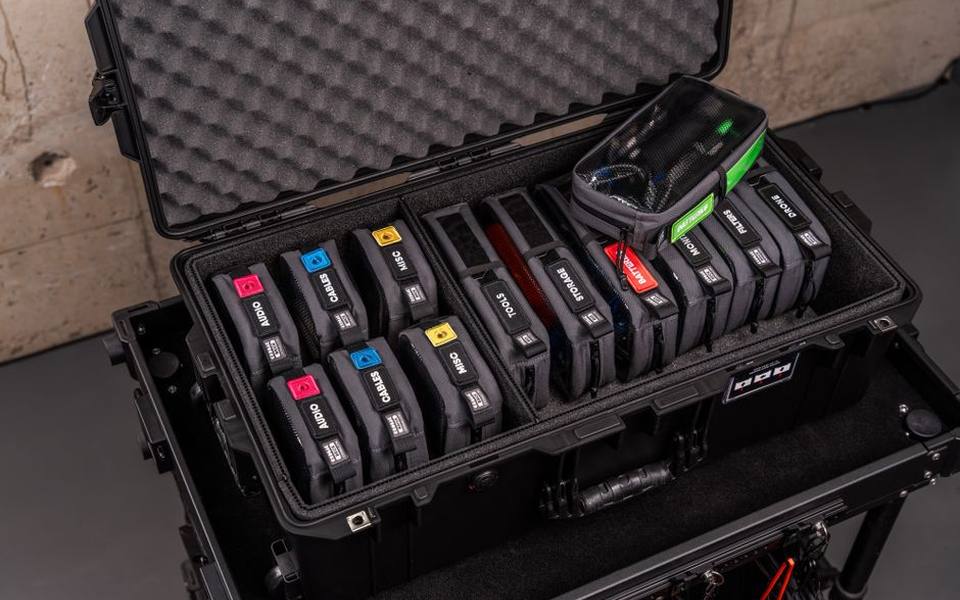
The interior arrangement of a hard shell case typically relies on customizable open-cell pluck foam or denser closed-cell high-density foam with cutouts. High-density cutouts keep the riser, broadhead boxes, releases, and arrows separated so accessories never rattle against delicate limb finishes during rough transit. Furthermore, rigid cases prevent external objects from pressing directly against your compound limbs, which could otherwise bend cam axles or twist limb brackets.
While hard cases offer unmatched physical defense, their bulk and weight can make them cumbersome for quick trips down to the local range. If you routinely load gear into compact vehicles, measure your trunk dimensions alongside the exterior case specs to ensure it fits flat across the deck. When preparing for cross-country hunts, investing in a wheeled hard travel case prevents exhausting lugging through sprawling airport terminals.
Everyday convenience and protection with a soft bow case
For short trips to practice leagues or nearby shooting facilities, a padded soft bow case provides lightweight convenience and easy packing. High-denier nylon or ripstop polyester exteriors withstand abrasion from gravel and car seats while dense interior foam lining protects against routine bumps and scratches. Soft cases slip effortlessly behind vehicle seats and take up very little closet storage space at home when empty.
Modern soft luggage often includes generous external pockets designed specifically to house full-length arrow tubes, stabilizer rods, release pouches, and target scorecards. Internal tie-down straps anchor the riser firmly in place so your bow does not slide around inside the sleeve while being carried by the shoulder strap. This all-in-one organization keeps your essential range kit grouped together so you never arrive at the line missing an armguard or hex wrench set.
The main limitation of soft storage is its vulnerability to heavy crushing forces, meaning you must never stack heavy coolers or luggage on top of a soft-cased bow. For archers living in active hunting regions like archery ranges in Wisconsin where range visits happen multiple times a week, a quality padded soft case remains the practical daily workhorse for vehicle transit.
Published 2026-09-21 · reviewed with each rebuild, last October 2026.
Find archery ranges & sports shops near you
The directory lists 38,975 archery ranges & sports shops by state and city — pick your state or use the “Near me” button in the header.
More guides
-
 Money
MoneyA Guide to Archery Range Fees and Lesson Costs
-
 Buying
Choosing Broadheads and Aiming for the Perfect Shot
-
 Service
DIY Bow Maintenance, Tuning, and Basic Repairs
-
 Buying
Choosing Sights and Rangefinders for Better Accuracy
-
 Buying
Essential Gear for Target Practice and Bowhunting Preparation
-
 Money
MoneyUnderstanding Bow Purchase and Restringing Costs: A Complete Pricing Guide
-
 Owning
Arrow Selection, Cutting, and Fletching at Home: A Complete Guide
-
 Safety
Bowhunting Shot Placement Guide for Deer and Turkey
-
 Buying
Complete Guide to Choosing the Best Crossbow Broadheads
-
 Money
MoneyHow Much Does Archery Cost? A Realistic Beginner Budget
-
 Buying
Choosing the Right Arrows and Field Points: Shaft Materials, Weights, and Tuning
-
 Buying
Best Archery Sets for Beginners: Complete Buyer Guide and Starter Tips
-
 Owning
Best Archery Targets and Backstops: 3D, Foam, Bag, and DIY Setup Guide
-
 Buying
Beginner Archery Buying Guide: Recurve, Compound, and Traditional Bows
-
 Buying
Bowfishing Equipment Guide: Bows, Reels, Arrows, and Rigging Setups
-
 Owning
Lighted Nocks and DIY Arrow Building: Fletching, Cutting, and Tuning
-
 Buying
Crossbow Bolts, Broadheads, and Cocking Devices: Complete Buyer's Guide
-
 Buying
Complete Arrow Selection Guide: Carbon Shafts, Spine, Length, and Brands
-
 Safety
Archery Protective Gear: Arm Guards, Chest Protectors, Tabs, and Slings
-
 Buying
Archery Quivers Buying Guide: Hip, Back, and Bow-Mounted Options
-
 Buying
Bow Release Aids Explained: Wrist Strap, Thumb Button, and Hinge Releases
-
 Buying
Arrow Rests Compared: Whisker Biscuit, Cable-Driven, and Limb-Driven
-
 Safety
Archery Lessons, Proper Form, Range Etiquette, and Youth Programs
-
 Owning
Complete Guide to Single Pin Bow Sights and Sight Tapes
-
 Owning
Arrow Selection and DIY Arrow Building: Shafts, Fletching, and Tools
-
 Owning
Finding Archery Ranges, Pro Shops, Clubs, and Instructor Programs
-
 Buying
Best Hunting Broadheads: Fixed Blade vs Mechanical Broadheads
-
 Buying
Archery Targets Guide: 3D Targets, Bags, Blocks, and DIY Backstops
-
 Buying
Archery Quivers Guide: Bow-Mounted, Hip, Back, and Crossbow Quivers
-
 Service
Bow Tuning and Setup: Paper Tuning, Arrow Rests, and Bow Maintenance
-
 Buying
Bowfishing Gear Guide: Bows, Rigs, Arrows, and Setup Options
-
 Owning
Essential Archery Accessories: Lighted Nocks, Arrow Pullers, and Arm Guards
-
 Buying
Archery Release Aids Guide: Thumb, Hinge, Wrist, and Mechanical Releases
-
 Buying
Essential Bowhunting Gear, Deer Supplies, and Gift Guide
-
 Buying
Crossbow Buying Guide: Matching Platforms, Bolts, Optics, and Fletching
-
 Buying
Beginner Bow & Arrow Starter Kits: How to Choose Your First Setup
-
 Owning
Traditional Archery, Longbows, and Primitive Gear
-
 Buying
Deer Hunting Bows: Comparing Recurve and Compound Setups, Finding Deals, and Studying Hunting Film
-
 Buying
Compound Bow Setup, Tuning, Form, and Equipment Guide
-
 Owning
Compound Bow Release Aids and Grip Tape: Enhancing Control and Consistency
-
 Service
Crossbow Maintenance: String Replacement and Scope Sighting Guide
-
 Owning
Broken Bow Cabin Rentals: Complete Beavers Bend Vacation Guide
-
 Safety
Broken Bow Lake Rentals: Complete Guide to Boats, ATVs, and Trail Gear